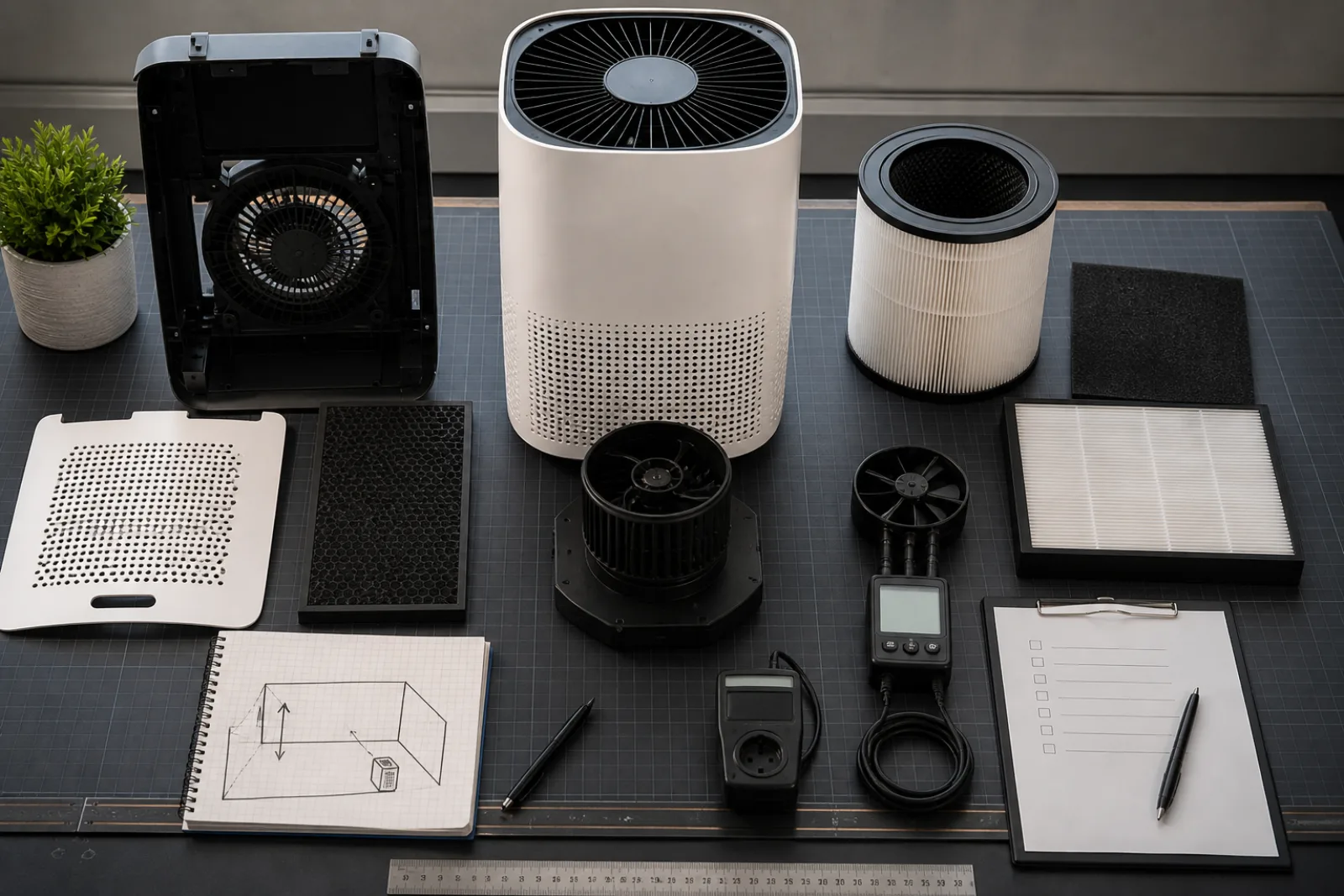
Air cleaner listings compete on filter brand names, app connectivity, and night-light features. None of those predict whether a unit will actually clear noticeable pollutant levels from your room. The number that does is Clean Air Delivery Rate, or CADR, an independently tested rating (developed by AHAM, the Association of Home Appliance Manufacturers) that measures how fast a unit filters a defined volume of air for three particle types: dust, pollen, and tobacco smoke, used as stand-ins for large, medium, and small particles respectively.
The EPA's own guidance on air cleaners treats CADR as the central spec to check, ahead of filter type or brand. It is also, conveniently, one of the few air-cleaner specs with a simple rule attached to it.
- 150 sq ft room
- Minimum smoke CADR of 100
- 200 sq ft room
- Minimum smoke CADR of 132
- 300 sq ft room
- Minimum smoke CADR of 200
- 450 sq ft room (large open living area)
- Minimum smoke CADR of 300
AHAM two-thirds rule: minimum smoke CADR = room square footage x 0.67. Ratings assume an 8-foot ceiling; higher ceilings require a higher-rated unit.
The rule itself is simple: multiply your room's square footage by roughly two-thirds (0.67) to get the minimum smoke CADR you need. A 200-square-foot bedroom needs a unit with a smoke CADR of at least 132. Most manufacturers also print a maximum recommended room size directly on the box or listing, which is really just this same math worked backward from their unit's tested CADR, so checking that number against your actual room size is the fastest sanity check available before buying.
Smoke CADR specifically is worth prioritizing over the dust or pollen numbers if you have to pick one to compare, because smoke particles are the smallest of the three tested sizes, and a unit that handles small particles well typically handles the larger dust and pollen particles at least as well. The reverse is not guaranteed.
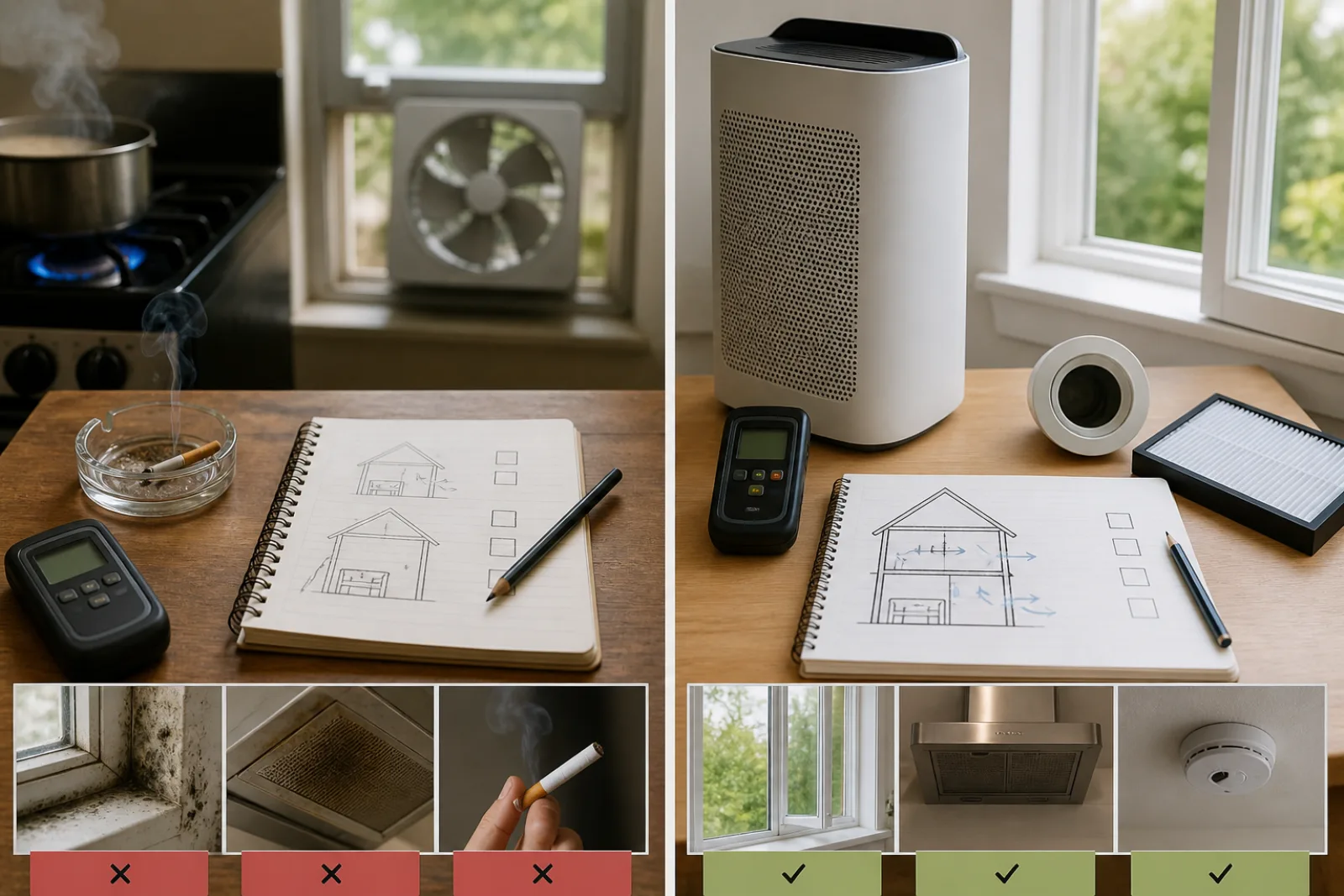
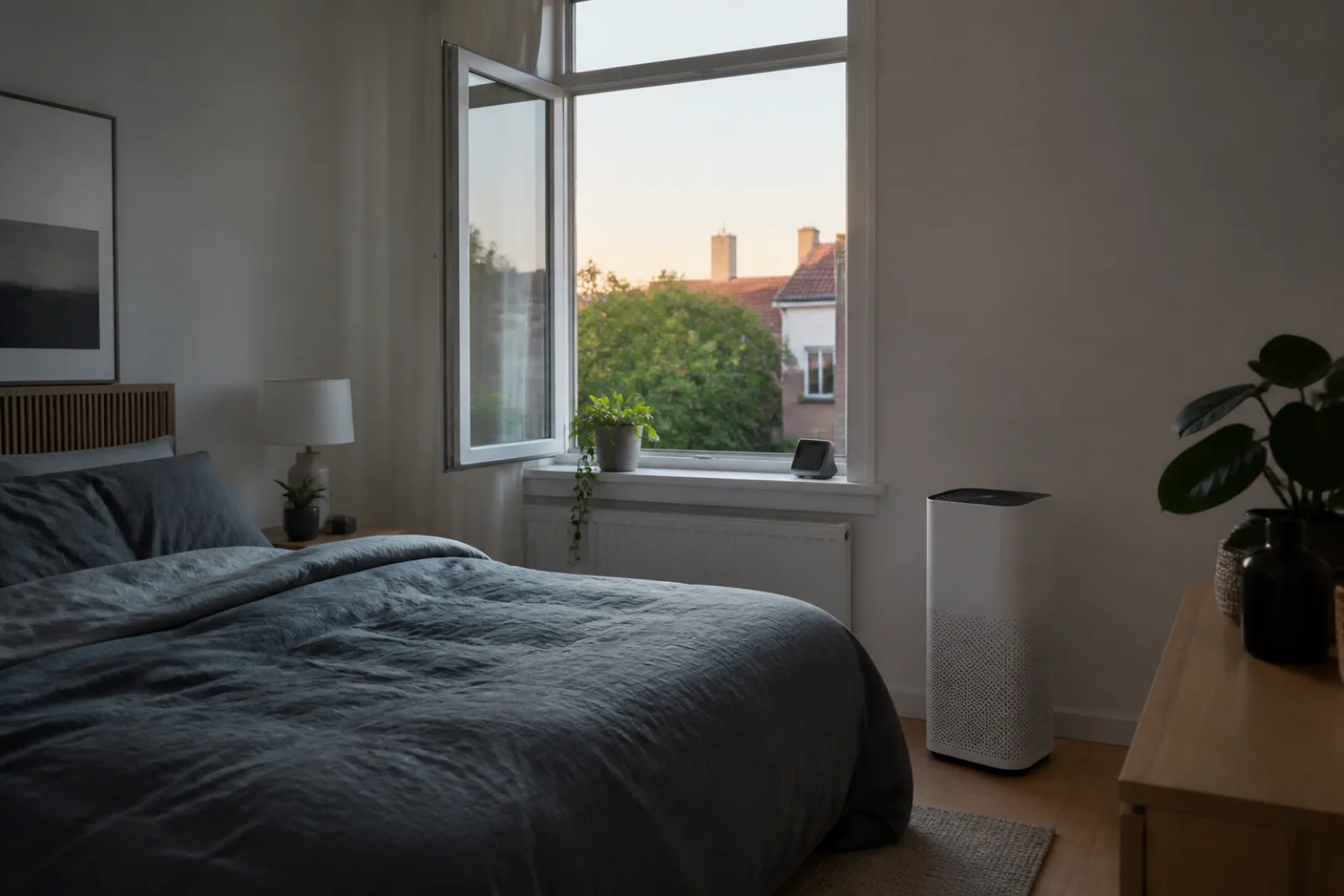
CADR only measures how fast a unit filters air, not what it removes. The EPA's guidance is explicit that portable air cleaners are meant to supplement source control and ventilation, not replace them: removing or reducing the source of a pollutant, and increasing outdoor air exchange when conditions allow, do more for indoor air quality than filtration alone, and an air cleaner cannot compensate for an active, unaddressed source like a gas leak, mold problem, or unvented combustion appliance. Once source control and ventilation are handled, a correctly CADR-sized air cleaner is a legitimate supplement, not a replacement for either.
Buying by the numbers
- 01Calculate your room's minimum required CADR
Square footage x 0.67, using the smoke rating.
- 02Check the unit's ceiling-height assumption
CADR ratings typically assume 8-foot ceilings; taller rooms need a higher-rated unit.
- 03Prioritize smoke CADR if comparing multiple ratings
It reflects the smallest tested particle size and is the most conservative number to buy against.
- 04Confirm filter replacement cost and interval
A cheaper unit with expensive, frequent filter replacements can cost more over a year than a pricier one.
- 05Check noise level at the fan speed you'd actually run
Published CADR is often tested at the highest fan speed, which may be too loud for regular use.
The short version
- 01
CADR, not filter brand or app features, is the standardized spec that predicts real-world performance for your room size.
- 02
AHAM's two-thirds rule converts CADR directly into a room-size match: multiply square footage by 0.67 for the minimum smoke CADR needed.
- 03
An air cleaner supplements source control and ventilation; it does not replace either, per EPA's own guidance.
Questions
- 01Does a HEPA filter guarantee good performance regardless of CADR?
No. HEPA describes filter media efficiency at removing particles that pass through it, but CADR measures the whole unit's actual air-filtering speed, which depends on fan power and airflow design as much as filter media. A HEPA-filtered unit with a low CADR for your room size will still underperform.
- 02Is a higher CADR always better regardless of cost?
Not necessarily past your room's actual requirement; a unit rated well above your room's needed CADR can usually run at a lower, quieter fan speed for the same effective clean-air delivery, which is a genuine benefit, but paying for CADR far beyond what any room in your home requires has diminishing practical value.