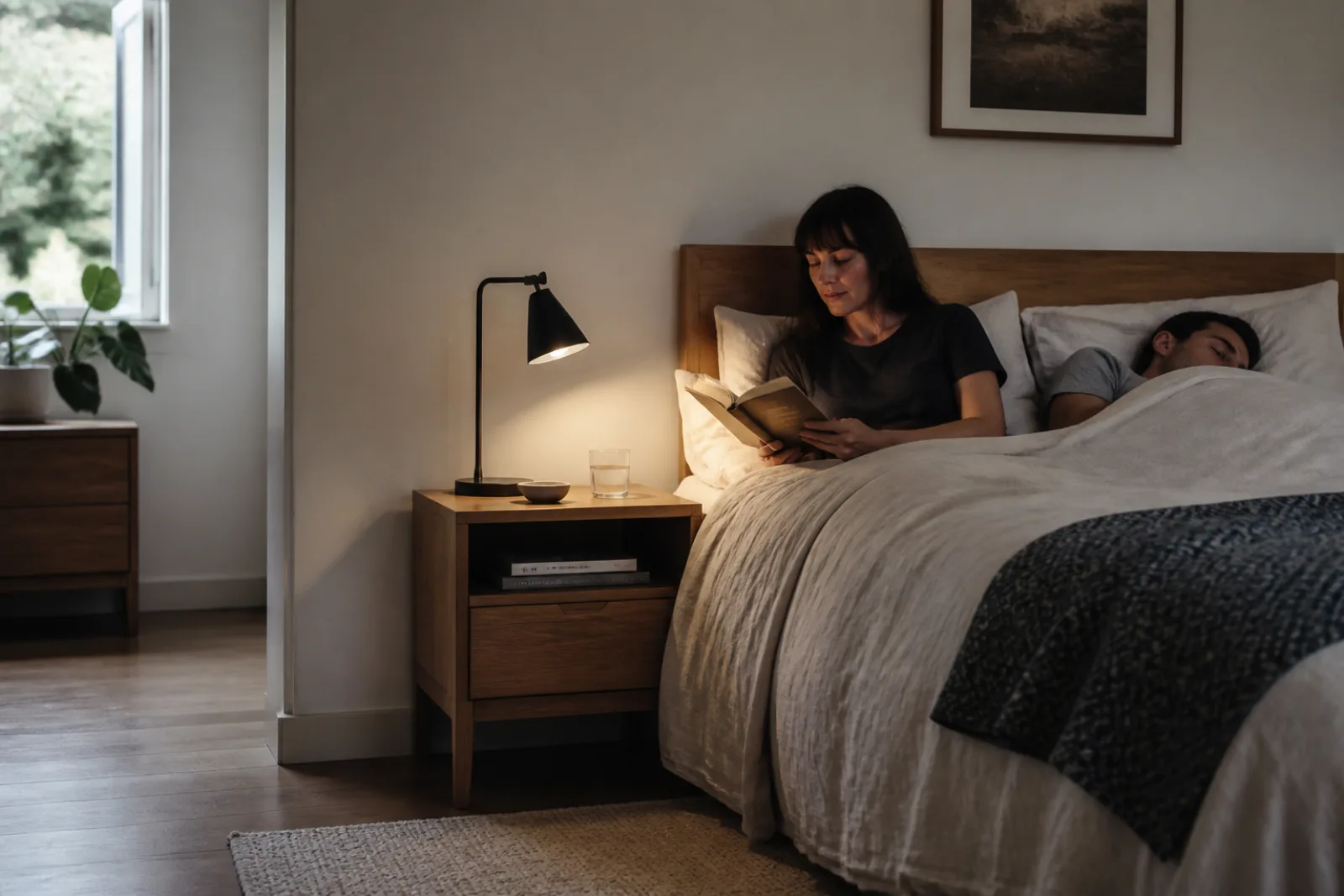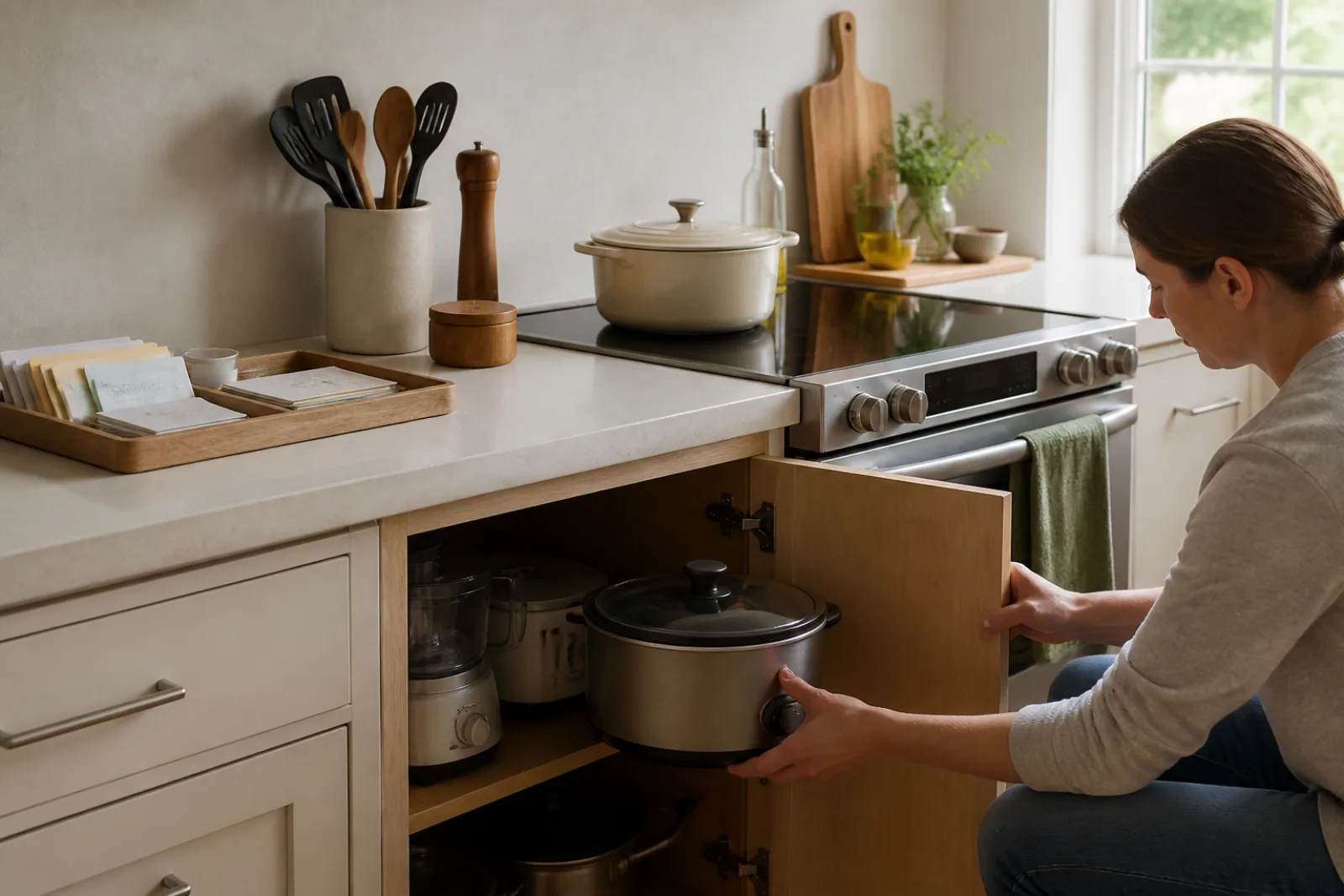
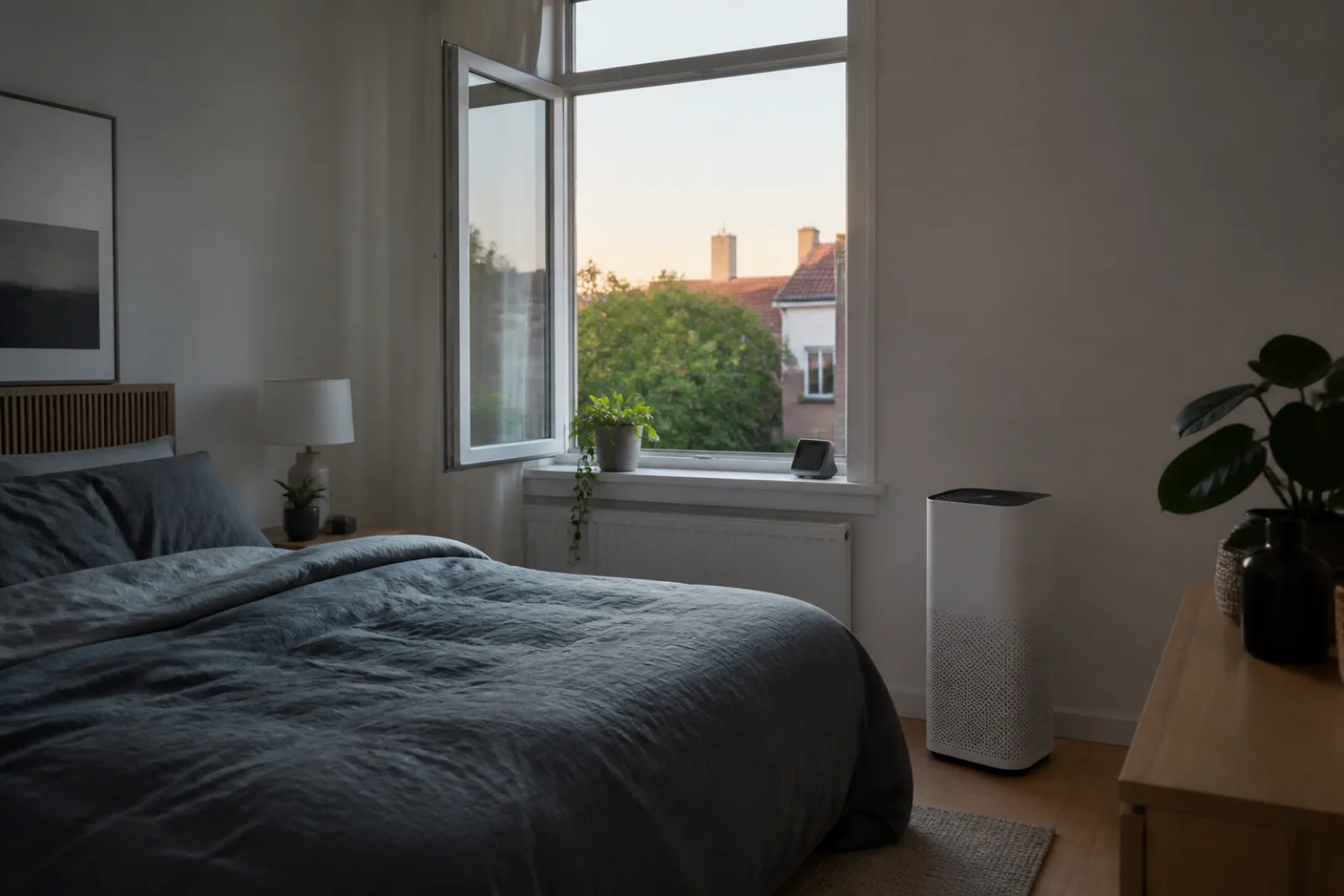
Indoor air quality advice is almost always written for a whole house: the living room, the kitchen, the space where the HVAC return sits centrally and someone is only ever passing through for a few hours. A bedroom breaks that pattern. It is the one room where a person, often two, occupies a fully closed space continuously for seven to nine hours, breathing the same air with the door shut, frequently without its own exhaust fan the way a kitchen or bathroom has one.
EPA's guidance on improving indoor air quality is built around three strategies: control the source, ventilate, and filter as a supplement to the first two. All three still apply to a bedroom. What changes is the specifics: which sources are actually present in a bedroom, what a closed door does to ventilation that a kitchen door swinging open all evening does not have to deal with, and how small a bedroom actually is once you are sizing a filter to it rather than guessing.
Source control is EPA's first strategy because removing a pollutant is generally more effective, and cheaper, than diluting or filtering it after the fact. A bedroom's sources are specific to a bedroom: dust mites concentrated in bedding and mattresses, a new mattress or upholstered headboard off-gassing volatile organic compounds for weeks after purchase, closets holding damp towels or worn clothing that a lidded hamper traps rather than airs out, scented candles or plug-in air fresheners that are disproportionately common on a nightstand specifically, and pet dander if an animal sleeps in the room. None of these show up on a generic living-room list. Washing bedding weekly in hot water, airing out a new mattress before the sheets go on, using an open-weave hamper instead of a sealed one, and skipping the scented plug-in nearest the pillow are all source control, and all specific to this one room.
Ventilation is where a bedroom most clearly diverges from the rest of the house. EPA's ventilation guidance points to opening windows and doors when weather allows and running exhaust fans, straightforward advice for a kitchen or bathroom that already has a fan built in. A bedroom usually does not, and the door is typically closed for most of the night for privacy, light, and sound. In a home with central heating and air conditioning, that closed door can matter more than it seems: guidance from the Department of Energy's Building America program on ducted returns notes that bedrooms without their own dedicated return duct can develop real pressure imbalances once the door shuts, and that a standard door undercut, the gap between the door's bottom edge and the floor, usually is not enough return path on its own, especially with carpet. The practical effect is that a bedroom can end up cut off from the same central filtration and air exchange that is working fine in the rest of the house, right as it is most needed.
That closed-door problem is not just a comfort issue. A bedroom with the door shut and no fresh air moving through it accumulates carbon dioxide over the course of a night simply from one or two people breathing in a confined space for seven or eight hours, something no other room in the house experiences on that kind of continuous, unbroken schedule. A 2024 field-lab study in Building and Environment tested this directly: compared with ventilation that held average bedroom CO2 near 750 parts per million, ventilation rates that let CO2 climb to 1,000 or 1,300 ppm measurably reduced sleep efficiency, by 1.3 and 1.8 percentage points, and increased time spent awake during the night by 5 and roughly 8 minutes. Cracking the bedroom door, or the window, before bed is a small, specific, bedroom-only action with a measured effect that a general instruction to improve ventilation does not capture.
The same three strategies EPA recommends for any indoor space, with the parts that are actually different once the space in question is a bedroom with the door closed all night.
- 01Source control
Bedding and mattress dust mites, new-mattress off-gassing, damp items in a closed closet, scented candles or plug-ins near the pillow, pet dander if an animal sleeps in the room
- 02Ventilation
Most bedrooms have no built-in exhaust fan; a closed door can cut off central HVAC return air if the room lacks its own return duct; cracking the door or window before bed measurably lowers overnight CO2 buildup
- 03Filtration
Size a portable air cleaner to the room's actual square footage using its CADR rating, not its price; set an HVAC filter to MERV 13 or as high as the system tolerates, since filtered central air may be reaching this specific room the least
Filtration is a supplement, not a substitute for the first two, but it is also the easiest of the three to size correctly and the easiest to get wrong. EPA's own sizing chart for portable air cleaners scales with room square footage: a 100-square-foot room needs a minimum CADR, or clean air delivery rate, of about 65, a 200-square-foot room needs about 130, and a 300-square-foot room needs about 195, roughly 65 CADR for every 100 square feet, adjusted upward if the ceiling runs higher than 8 feet. A secondary bedroom, commonly in the 110 to 130 square foot range, needs a CADR of only about 75 to 85; a larger primary bedroom near 220 to 225 square feet needs closer to 145. Buying a unit rated for a much larger space than the actual bedroom is not really a safety margin, it is an unnecessary cost, and buying one sized for a living room because it was on sale can badly undersize it for a bedroom's actual square footage.
EPA's sizing chart scales at roughly 65 CADR per 100 square feet; most secondary bedrooms, at 110 to 130 square feet, need a minimum CADR of only about 75 to 85, well below what many higher-priced portable air cleaners are rated for.
Air Cleaners and Air Filters in the Home, U.S. Environmental Protection Agency · accessed 2026-08-12 · Values are EPA's published minimum CADR figures at 100-square-foot increments (65 CADR per 100 sq ft); intermediate bedroom-size figures cited in the text are linearly interpolated from EPA's own scaling rule.
Bedroom Air Quality, in Order
- 01Bedding washed weekly in hot water; a new mattress aired out before sheets go on
- 02Closet and hamper checked for damp or worn items sitting for days without airing
- 03Door or window cracked before bed if the room has no dedicated HVAC return duct
- 04HVAC filter rated MERV 13 or the highest the system can handle without restricting airflow
- 05Portable air cleaner's CADR checked against the room's actual square footage, not its price tier
Questions
- 01Is an air quality monitor worth buying for a bedroom?
It can reveal a pattern, elevated CO2 overnight with the door closed, for instance, but it does not identify most specific pollutants on its own. It is more useful for confirming that a change, cracking the door, upgrading a filter, actually moved a number than for diagnosing a problem from scratch.
- 02Does a bedroom really need its own air cleaner if the house has central HVAC?
Often yes, specifically because a closed bedroom door can restrict how much centrally filtered air actually reaches that room overnight, especially in a house without a dedicated return duct in every bedroom.
- 03What is the single highest-impact change for a typical bedroom?
Source control usually costs nothing and matters most: washing bedding weekly and getting a new mattress's off-gassing period out of the way before the room is slept in beats any filtration upgrade for that specific pollutant load.
The Short Version
- 01
Source control comes first and is bedroom-specific: bedding, mattress off-gassing, a closed closet, and scented products near the pillow.
- 02
A closed door without its own return duct can cut a bedroom off from central filtration exactly when it is needed most.
- 03
Size a portable air cleaner's CADR to the room's real square footage; a typical secondary bedroom needs far less than a living room does.