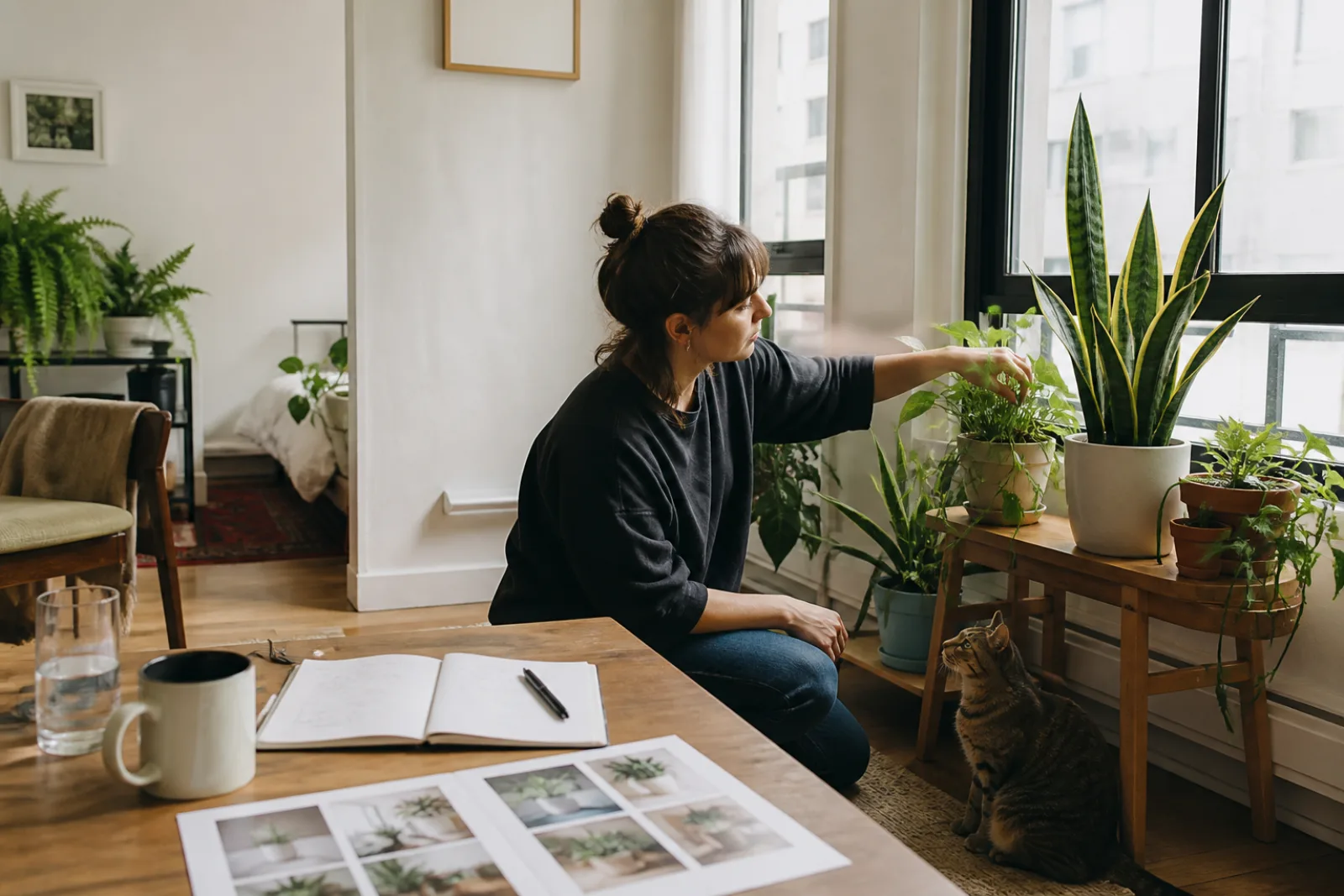
The hangtag that says 'bright indirect light' is doing marketing, not horticulture. In an apartment, light is a geometry problem: which way the glass faces, how far the pot sits from that glass, and whether a building next door eats the afternoon. A fiddle-leaf fig that was grown under nursery lights will not forgive a dim hallway. A snake plant might. The realistic choice is the plant that matches the spot you already have, the water you will actually give, and the cat who thinks every pot is a salad.
Two claims are worth killing early. Houseplants will not replace an open window or an air cleaner. The EPA says so in plain language. And a plant listed as non-toxic is not pet food; the ASPCA notes that eating any plant material can still upset a stomach.
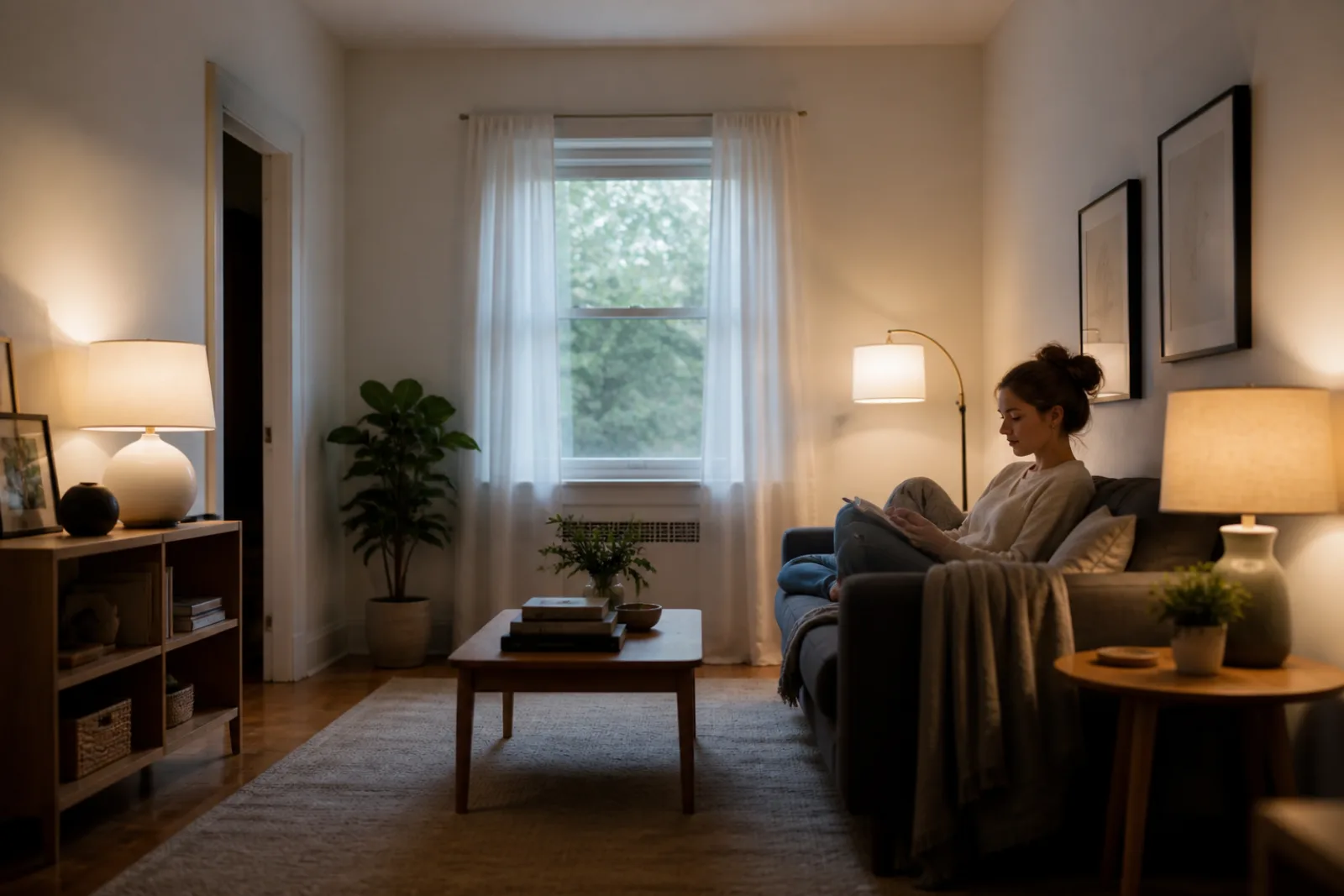
University of Arizona Cooperative Extension sorts indoor light into three intensity bands, measured in foot-candles, and then translates those bands into ordinary rooms. High light is 150 to 1,000 foot-candles: generally within about four feet of a large south, east, or west window. Medium is 75 to 150: often four to eight feet from those windows, or west glass that does not take direct sun. Low is 25 to 75: more than eight feet from windows, the center of a room, a hallway, an inside wall, and many north exposures even close to the glass. Locations that get only ordinary room lamps are usually low light. Intensity falls off fast; Arizona notes that moving a few feet back from the glass can drop you from a high-light plant's needs into a low-light plant's world.
You do not need a meter to use this. Stand where the pot will go at midday and at late afternoon. If you can read comfortably without turning a lamp on, and you can see a distinct shadow, you are probably in medium or high. If the spot feels like a corridor even at noon, it is low. North glass in winter is not 'a nice window'; it is often low light with a view.
| Indoor light | Where it usually is | Plants that can live there | Plants that will sulk |
|---|---|---|---|
| High (about 150-1000 fc) | Within a few feet of large south, east, or west windows | Jade, most cacti and succulents, citrus, hibiscus, many herbs | Low-light foliage plants that scorch in direct sun (some ferns, calathea) |
| Medium (about 75-150 fc) | Four to eight feet from bright windows; bright north in summer | Pothos, philodendron, many peperomias, African violet | Desert succulents that stretch and flop without real sun |
| Low (about 25-75 fc) | Room centers, hallways, interior walls, many north windows | Cast-iron plant, some snake plants, ZZ plant, parlor palm, Chinese evergreen | Fiddle-leaf fig, most succulents, anything sold as a 'full sun' patio plant |
Watering is downstream of light. A plant in high light drinks. The same species in a dim corner sits wet, and wet soil is how roots rot. Arizona's practical check is still the right one: for pots up to about eight or ten inches, water when the top inch of mix is dry; succulents wait longer. Nursery care cards assume nursery light. If you have moved the plant into low light, stretch the interval. Lift the pot. Light when dry, heavy when wet. Overwatering is the common indoor death, not neglect, because people are trying to be good.
Access matters as much as frequency. A hanging plant you cannot take down will not get a thorough soak and drain. A cachepot with no hole will hold a swamp under a pretty nursery pot if you never empty it. Put plants where you can carry them to a sink, or use a saucer you will actually dump. If that sounds like too much work, you do not have a plant problem. You have a location problem. Choose fewer, tougher plants closer to the kitchen.
Pets change the list. ASPCA Animal Poison Control maintains a searchable toxic and non-toxic plant database. Search the scientific name when you can; common names collide. True lilies (Lilium) and daylilies (Hemerocallis) are a known, severe problem for cats, including pollen and vase water, and they are an emergency, not a wait-and-see. Popular indoor plants that often show up as toxic include pothos, philodendron, snake plant, and sago palm (the last is especially dangerous). ASPCA has also published non-toxic household examples such as spider plant, parlor palm, African violet, and Christmas cactus. Non-toxic still does not mean edible. If a pet is a chewer, put even safe plants out of reach or skip them.
A realistic starter set for a dim, pet-containing apartment is smaller than a shop display: one or two low-light plants on a high shelf, checked against the ASPCA list, in pots you can move to the sink. Add a sun-loving plant only if you have the window it needs, in writing, in the room, not in the hallway you walk through.
Buy the plant last
Where will this pot actually live?
- 01How far is the spot from a real window, and which way does the glass face?
Use the high / medium / low map, not the hangtag.
- Within a few feet of south, east, or west glassYou may buy high-light plants, including many succulents. Still check pets and watering access.
- North glass, a hallway, or more than about eight feet from any windowBuy a documented low-light plant. Do not 'try' a fig or a cactus there.
- 02Can a cat or dog reach it?
Search ASPCA by scientific name.
- Yes, and the plant is listed toxic, or you are unsureSkip it, or place it fully out of reach. Do not rely on 'it probably will not eat that.'
- No pets, or the plant is listed non-toxic and still out of easy chewing rangeProceed, knowing non-toxic is not a snack.
- 03Can you get the pot to a sink, and will you empty the saucer?
If not, the plant will sit in leftover water.
- YesYou have a workable plant. Buy one, not six.
- NoChoose a smaller pot you can carry, or do not buy it. Drought-tolerant is not the same as neglect-in-a-cachepot.
A realistic plant is a matched plant
- 01
Assign the spot a light category before you shop. Distance from glass matters more than how pretty the window looks from the sofa.
- 02
Water less in low light. Rot is the usual indoor death.
- 03
Check ASPCA lists if you have pets. Do not use plants as air cleaners; EPA already closed that door.
Questions
- 01Can I use a grow light instead of a window?
Yes, if you actually run it for hours, close enough to the plant, on a timer. A decorative bulb in a floor lamp is not a grow light. If you will not run a dedicated fixture, buy a low-light plant for the room you have.
- 02The shop said this plant 'cleans the air.'
That claim traces to chamber studies, not to apartments. EPA: no evidence that a reasonable number of houseplants remove significant indoor pollutants. Keep the plant if you like it. Fix air with source control, ventilation, and filtration.
- 03My plant was fine, then dropped leaves in winter.
Day length and sun angle fall. A south window in January is not the same spot it was in June. Move closer to the glass, water less, and do not fertilize a plant that has stopped growing.