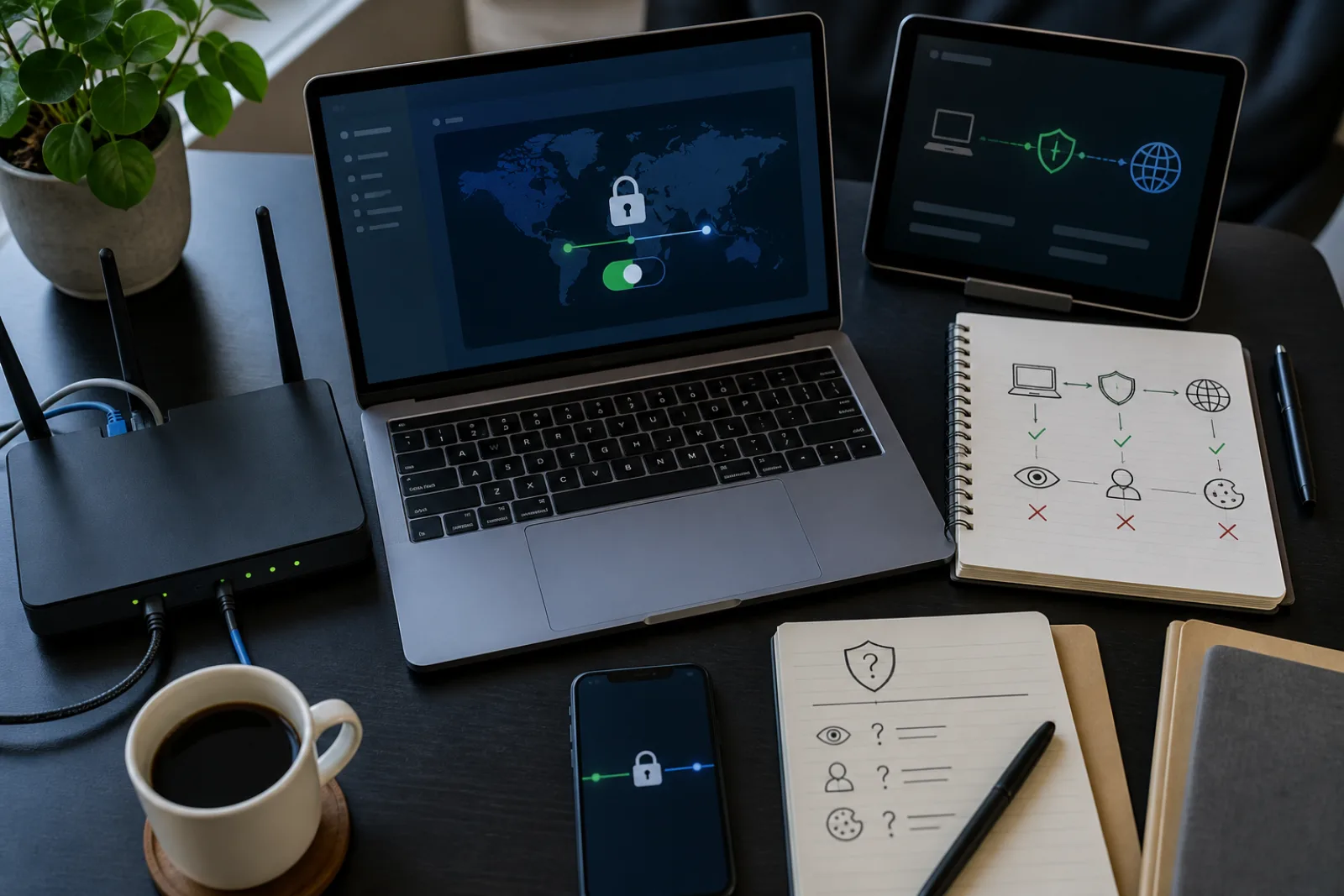
A VPN encrypts the hop between your device and the VPN company's servers, which is useful on open Wi-Fi. It does not make you anonymous to sites you log into, and CISA's mobile guidance treats a personal VPN as a transfer of residual risk, not a deletion of it.
A personal VPN encrypts traffic between your device and the VPN provider, which hides destinations from your ISP or a public Wi-Fi operator and protects the remaining unencrypted hops on that last mile. It does not hide your identity from sites you sign into, does not stop cookies or trackers, and, as both the FTC and CISA state, it shifts trust from the network you are on to a company whose logging and security practices you may know even less about.
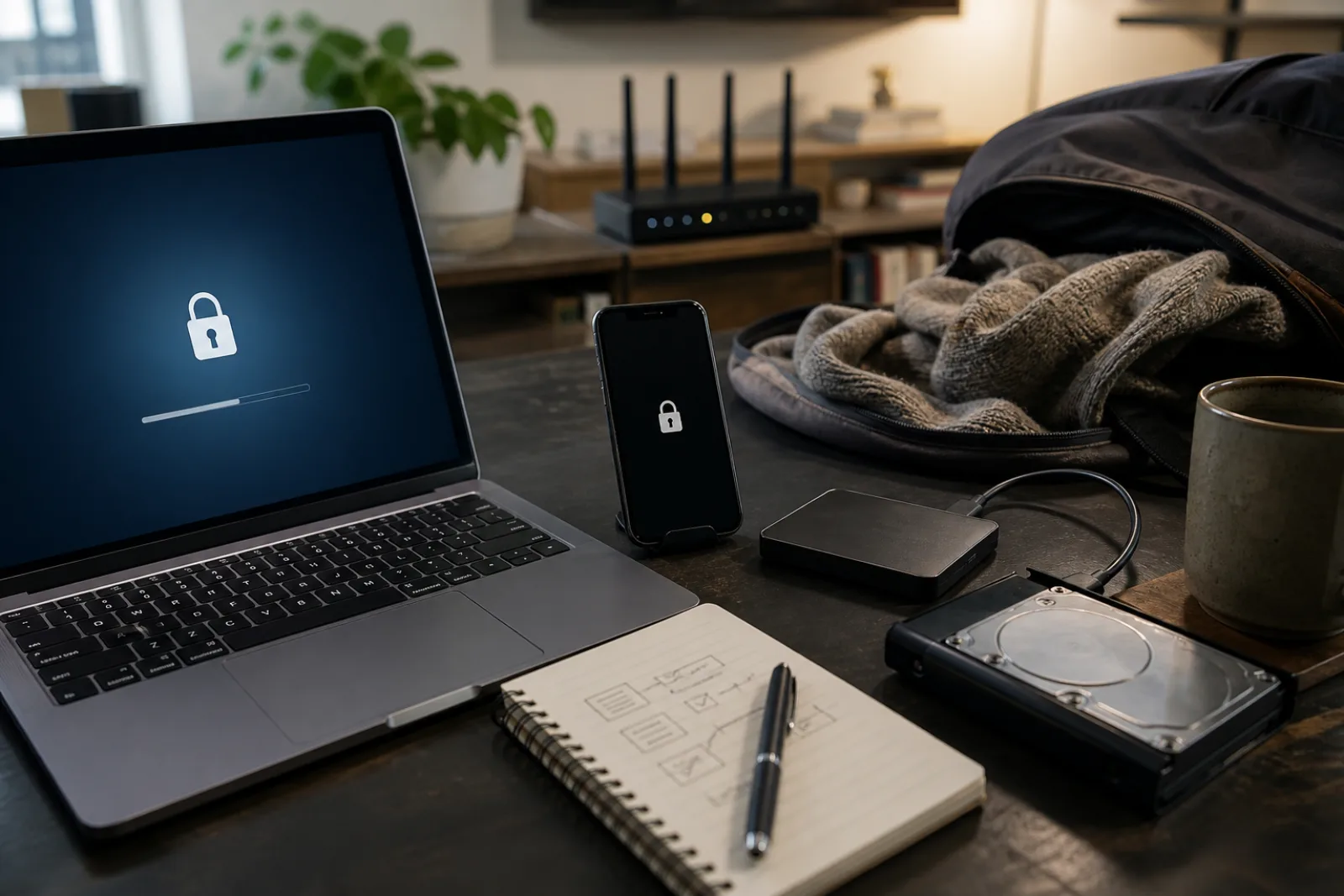
Device encryption protects a powered-off laptop if the drive is removed. It does not protect an unlocked phone in someone's hands, and iCloud or Google backups are a different surface than the device itself.
6 MIN
The weekly letter
CULTURE COLUMN in your inbox.
One useful story, a short edit of objects and ideas, and no manufactured urgency.