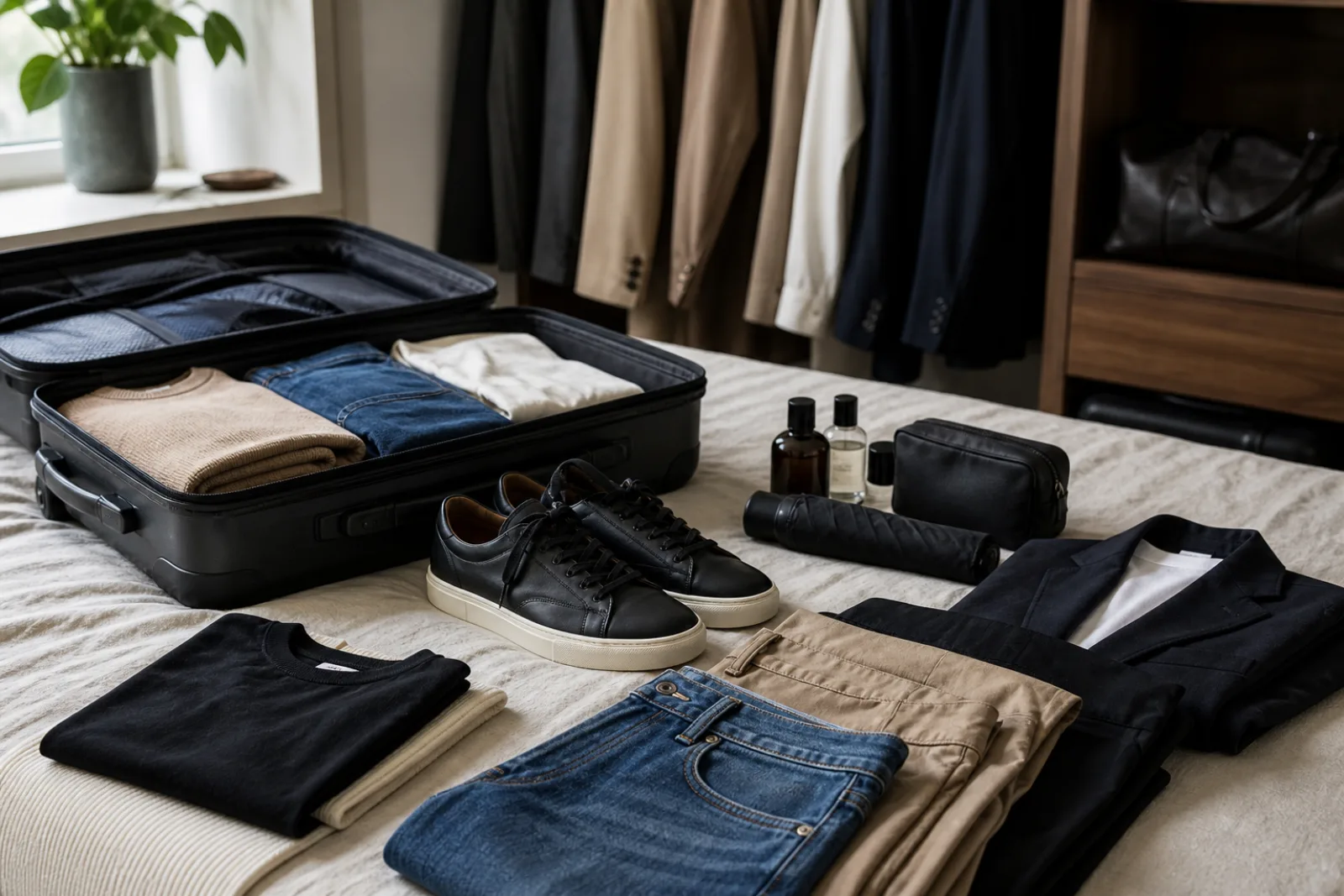
The item that wrecks a five-day bag is usually a second pair of shoes. They take the volume of several shirts, they are heavy, and on a lot of trips they get worn from the hotel door to dinner and back. Unless the weather will wreck the walking pair, or a dress code will not admit it, leave them home. Wear the walking pair on the plane. That pair has to be able to do the miles, the transit, and the indoor day. If it cannot, you chose the wrong one pair, not too few pairs.
Build the rest of the bag around that decision. Bottoms rewear. Tops and underwear turn over. Outerwear is a forecast problem, including the forecast inside: airplanes, museums, and restaurants that run the air conditioning as if it were a sport. A small wardrobe that omits the layer you will be cold in is not efficient. You will buy a hoodie at the airport or spend the week uncomfortable, which is a more expensive packing error than the hundred grams of a sweater.
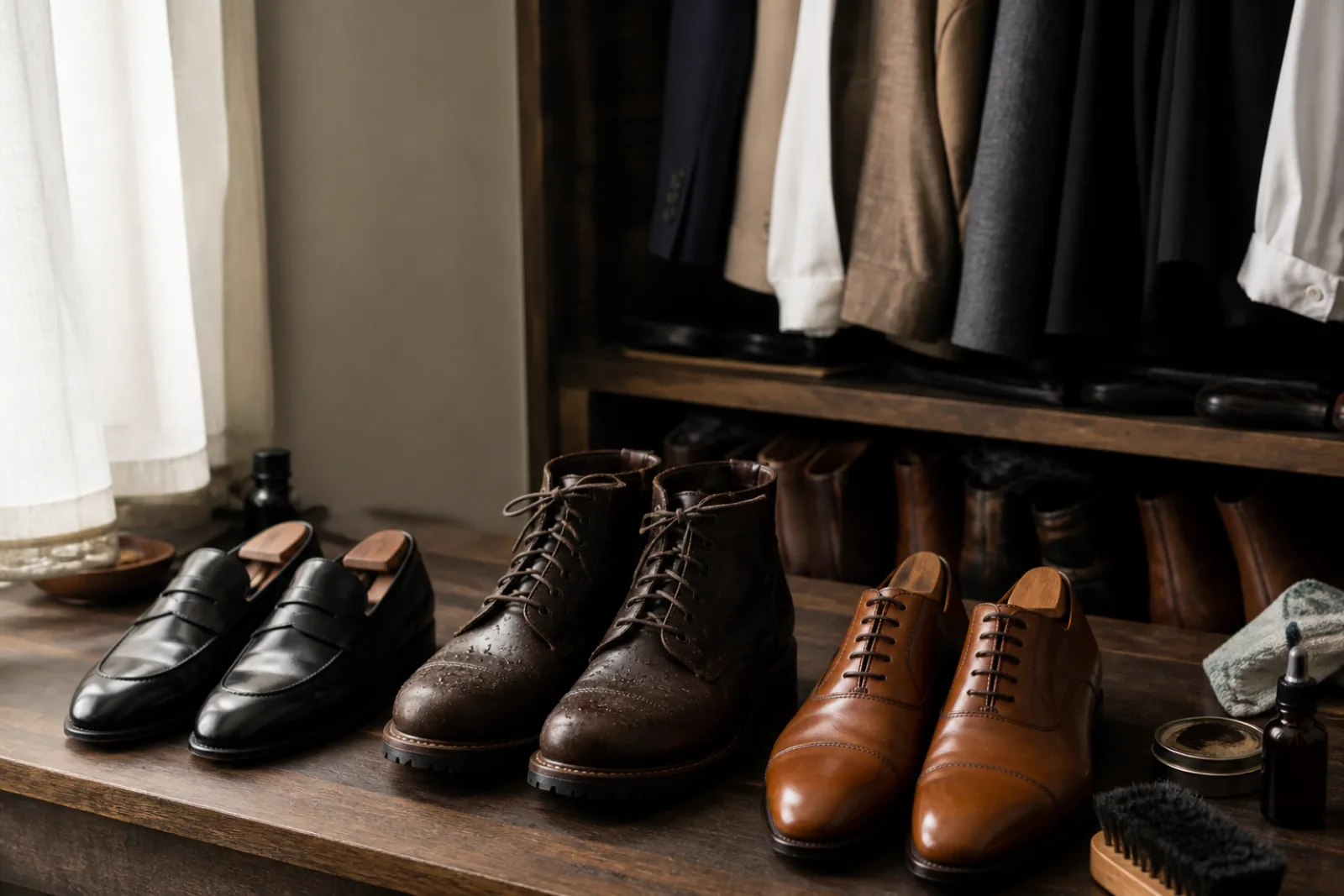
Footwear first, always. Name the surfaces and the hours: airport tile, a city sidewalk, a trail, a wet street, a wedding. Pick the pair that can do the dominant surface for the dominant hours. A broken-in leather sneaker or a rubber-soled boot covers most city trips. A dress shoe covers a trip that is mostly indoor and formal, and then you accept that the walking will be limited, or you put a rubber sole on that dress shoe before you leave. The second pair is a specialist. Rain that will soak mesh. Snow. A black-tie evening the walking pair cannot enter. A hike day in an otherwise urban week. If you cannot name the day the second pair is for, it is not coming.
If you do take a second pair, wear the bulkier one and pack the flatter one, stuffed with socks. Do not pack two pairs and wear sandals on the plane unless the whole trip is sandals. You still need the walking pair on your feet through the parts of travel that are walking.
| Fabric | Wrinkles in a bag | Hotel-sink overnight? |
|---|---|---|
| Merino or other wool knit | Usually shake out on a hanger. Steam from a shower helps. | Yes, if it is a thin knit. Rolls in a towel, hangs, often wearable by morning. Follow the care label: no wringing, no hot radiator. |
| Cotton jersey (T-shirts) | Low wrinkle. Fine packed rolled. | Possible, but slower to dry than merino or synthetics, especially in a humid room. Better as a bring-enough-for-the-days item. |
| Cotton poplin or oxford shirt | Wrinkles hard. Needs hanging, steam, or an iron you may not have. | A wash is easy. A dry that looks like a shirt is not. Pack these only if you will wear wrinkles or have an iron. |
| Linen | Wrinkles as soon as you look at it. That can be the point. | Dries, still wrinkled. Pack linen only if you accept the rumple as the garment. |
| Denim jeans | Low wrinkle. Heavy. | No. Jeans will not dry overnight in a sink. Rewear them. Do not plan a midweek jean wash on the road. |
| Synthetic travel pants or knit trousers | Usually low wrinkle. | Often yes. They are the bottoms version of a sink-wash plan, unlike denim. |
Rewear bottoms on purpose. For five days, two pairs in the bag plus the pair you fly in is a lot of trousers. Many trips want less: the flying pair, and one other. Jeans on the plane, a darker trouser for dinners, and you are done if the days are similar. A third pair is for a different job (shorts in heat, a hike pant, a dress trouser the jeans cannot cover), not for a fear of being seen twice in the same chinos. People you are meeting for the first time do not have a spreadsheet of your legs. You will notice. They will not.
Tops turn over because of sweat, sunscreen, food, and the fact that a shirt is what people actually look at. A reasonable five-day set is three to five tops that all work with the bottoms, plus the one you fly in if it still looks like a shirt at landing. Merino and good synthetics can be worn more than once if you air them. Cotton tees in heat are often one-day items. Pack to your sweat, not to an ideal of 'everyone rewears everything.' If you are going to a humid city in July, more undershirts and fewer clever layers. If you are going to a conference hotel that blasts cold air, a long-sleeve knit that can sit under a shirt is worth more than a fourth T-shirt.
Laundry access is a packing number. No laundry for five days means five days of underwear and socks, plus one spare, and enough tops for the sweat you expect. A hotel sink with a towel and a hanger is not a laundromat. It will do overnight for thin merino, underwear, socks, and some synthetic knits. It will not do for jeans, for a lined jacket, or for a thick cotton sweatshirt. If the care label says dry-clean, believe it on the road even more than at home. You do not have your usual workaround. Wash in the evening, roll in a towel to pull water, hang in moving air, not on a blasting heater. If the room has no airflow and high humidity, sink laundry may not dry. Then you needed the spare, not the soap.
Wrinkle behavior is a fabric choice, not a folding trick. Rolling helps cotton jersey and knits. It does not turn poplin into a knit. If you need a collared shirt that looks pressed, either pack a knit polo or a wool shirt that recovers on a hanger, or accept that you will use a hotel iron or a steamy bathroom. Linen is honest: it will look like linen. Pack it if that is the trip. Do not pack it for a board meeting unless rumpled linen is the meeting. A blazer in a bag will crease at the fold. Wear it on the plane or pack it in a way that lets it hang as soon as you arrive. If you cannot hang it, maybe you do not need it for five days.
Read two climates: outside and inside. The daytime high on your phone is not the airplane, and it is not a restaurant that keeps the dining room at 18°C. Pack one layer that can go over a T-shirt in both of those, in a fabric that does not need an iron. A merino crew or a light sweater does this on more trips than a second jacket. If the outside climate is actually cold or wet, the shell or the coat is not optional, and it should be worn or strapped, not folded into a cube that you then cannot get to on a platform.
Color is a mixing rule, not a personality test. If the bottoms are navy and the other bottoms are dark denim or grey, every top you brought should sit on both. A pair of trousers that only works with one shirt is a day outfit, which is what you are trying not to pack. You do not need a seven-color story. You need two bottoms and a handful of tops that are all on speaking terms. That is enough for five days of looking like a person who got dressed, which is the assignment.
Wear the most awkward piece on the plane: the shoes, the coat, the sweater. Pack what is flat. Put tomorrow's outfit on top if you land late. Keep a spare underwear and socks in the personal item in case the bag does not arrive. That spare is the only 'just in case' that consistently earns its space. A second pair of heels for a dinner you have not confirmed does not.
Five-day wardrobe, packed
- 01Named the one pair of shoes that can walk the trip, and wore them
Second pair only if you can name the day: rain, snow, or a dress code
- 02Bottoms: flying pair plus at most one or two in the bag
Each extra pair needs a different job, not a fear of repeats
- 03Tops: three to five that all work with both bottoms
Count sweat and indoor cold, not an outfit per day
- 04Underwear and socks for five days plus one spare
Spare in the personal item if bags can go missing
- 05One layer for airplane / indoor cold, in a no-iron knit if possible
- 06Weather shell or coat the forecast actually requires
Cut trousers before you cut this
- 07Checked care labels against the laundry you will have
Sink overnight: merino, synthetics, underwear. Not jeans, not dry-clean jackets
- 08Packed only fabrics you accept wrinkled, or that recover on a hanger
Pack in this order so the bag stays honest
- 01Shoes and weather
Choose the walking pair. Add a second pair only for a named weather or dress-code day. Add the shell or coat the forecast requires.
- 02Bottoms
Flying pair plus the one other job (dinner trouser, short, hike pant). Stop.
- 03Tops and layering knit
Only pieces that work with those bottoms. Include the indoor-cold layer.
- 04Underwear, socks, sleep, swim if the trip has water
Count days plus one. Swimwear is a job, not a maybe, if the hotel has a pool you will use.
- 05Edit by laundry and wrinkles
Remove anything that needs a dry cleaner or an iron you will not have. Remove the second shoes if you still cannot name their day.
Questions
- 01What if I have a wedding and a hiking day in the same five days?
That is a named second-shoe day, and maybe a third job in the bottoms. Pack the specialist pieces. Cut the extra T-shirts, not the dress shoes or the trail shoes. The bag gets bigger because the trip got more jobs, not because packing light failed.
- 02Can I wear the same jeans all five days?
Yes, if they are clean enough for you and the trip is not formal. Air them at night. Pack a second bottom only if you will be in rooms where jeans are wrong, or if you will be truly filthy.
- 03Should I pack a travel steamer?
Only if you packed fabrics that need one (poplin, a jacket you will not wear on the plane). Knits and merino usually do not. A steamer is a tax on having packed the wrong fabrics.