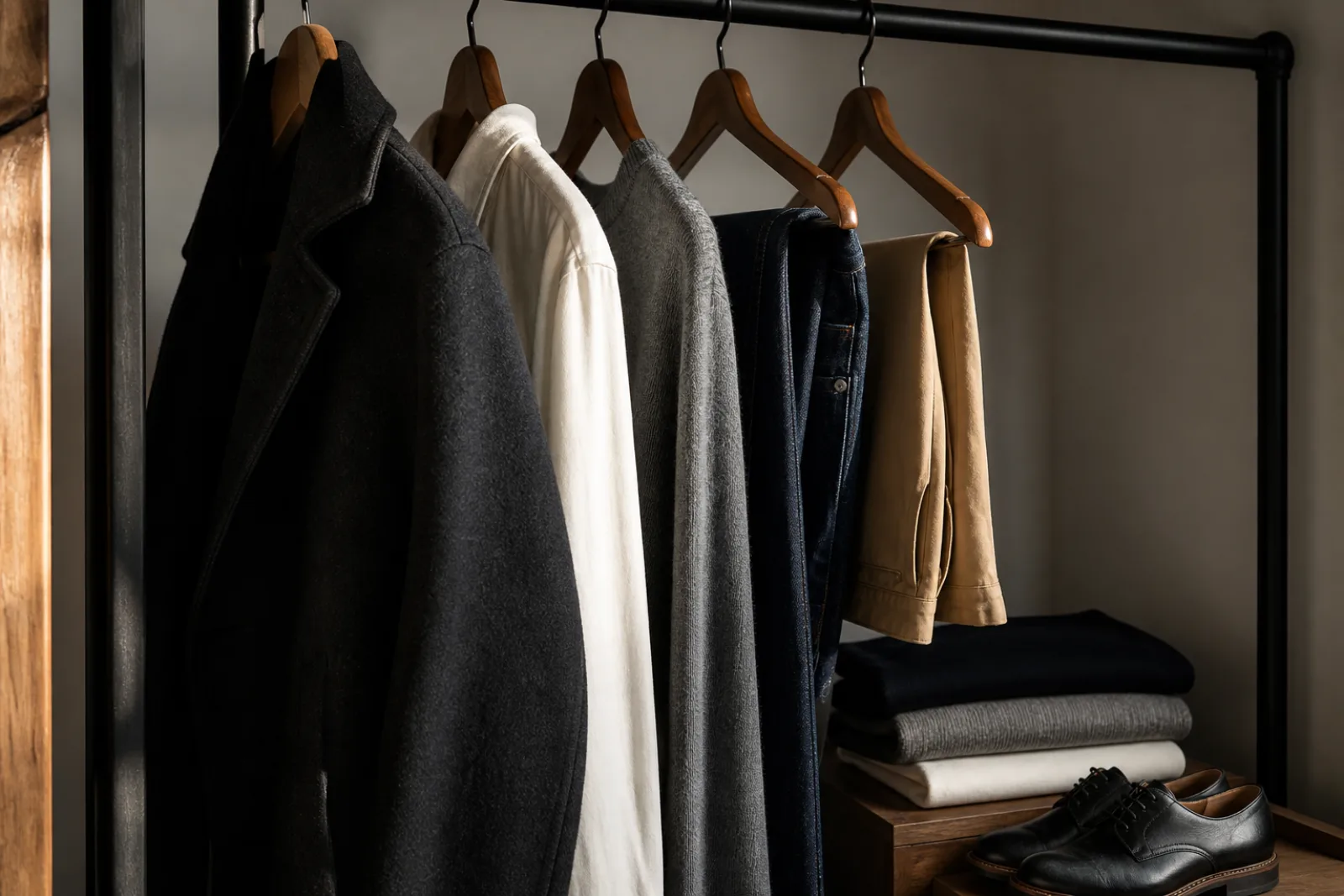
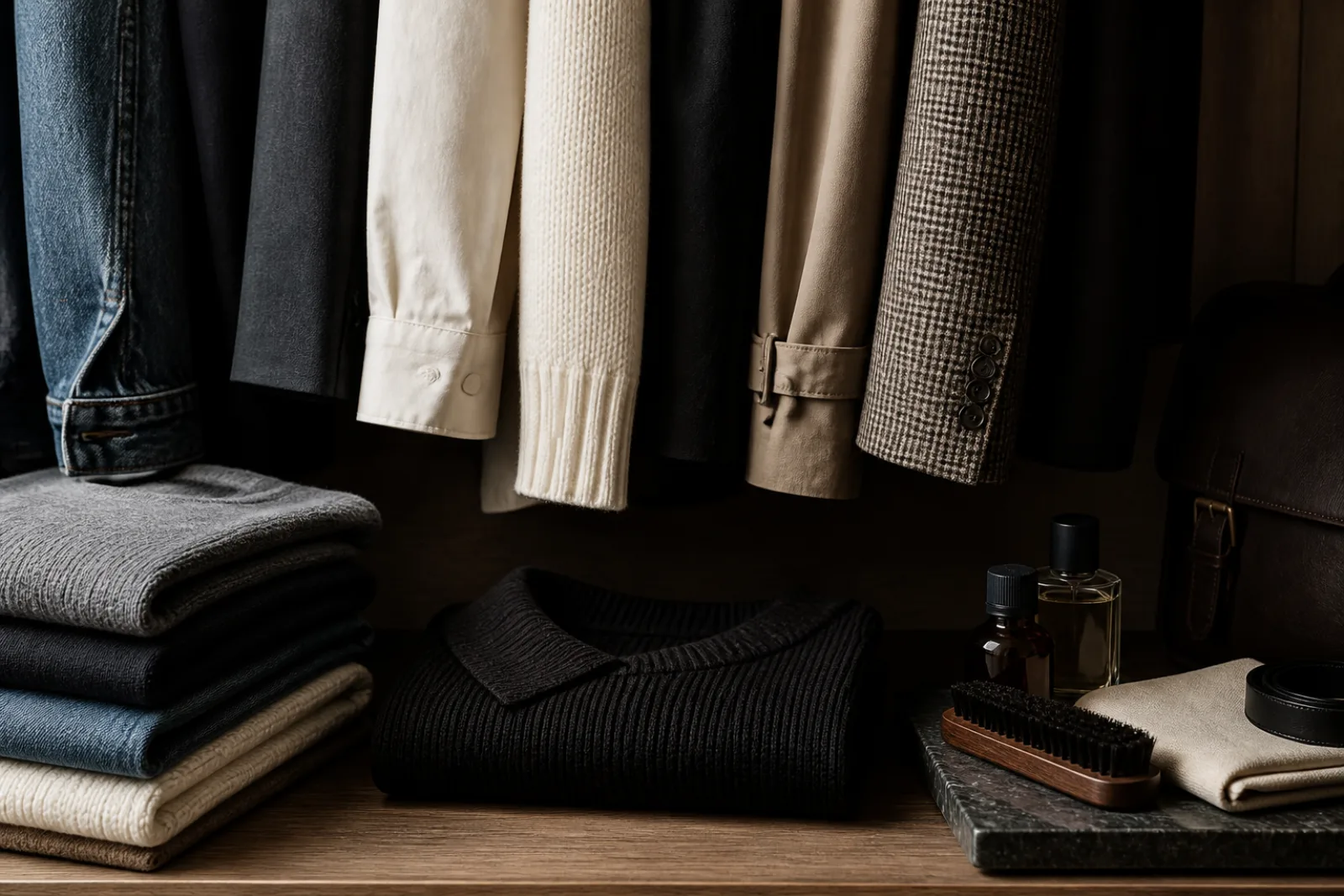
Personal style, as sold, is a new identity with a shopping list. Personal style, as worn, is the third Tuesday in a row you reached for the same jacket because it was clean, it fit the meeting, and you like how it sits on the shoulder. That repeat is information. The unused 'capsule' you built from a stranger's grid is a costume you have not scheduled.
You do not need a name for the style. You need a record of what already works, then a closet that makes those outfits easy to repeat. The smaller-working-wardrobe piece in this section is the count. This page is the pattern recognition.
Four weeks, then a sentence
- 01Log
One photo a day of what you actually wore, shoes included, in ordinary light. No restyling for the camera. Missed days are fine; lying is not.
- 02Cluster
Put the photos next to each other. Circle the repeats: a proportion (tuck plus straight pant), a color family, a shoe, a jacket. Ignore the one party outfit unless your life is parties.
- 03Name the constraint
Work dress code, commute, weather, laundry access. If the cluster only works in a drought of meetings, it is not a full style. It is a weekend.
- 04Write one sentence
Not a brand. A description: 'Dark trousers, a tucked knit, a leather shoe, one jacket.' That sentence is the filter for the next purchase.
- 05Edit slowly
Move the never-logged pieces out of the daily rail. Do not donate everything in a weekend. Wear the sentence for another month. Then buy, if something in the sentence is actually missing.
| Source | What it proves | What it does not |
|---|---|---|
| Two weeks of outfit photos | What you will put on when you are late | Who you wish you were on a mood board |
| A saved folder of other people | Taste you respond to | That those clothes will survive your job, climate, or laundry |
| A piece you keep 'for later' | Hesitation | A future self who will suddenly have a different commute |
| Compliments | That someone noticed | That you should copy that outfit every day if you hated wearing it |
Silhouette is more stable than trend. If the log shows a straight leg and a shoulder, you can change the fabric and keep the shape. If the log shows dresses and you keep buying trousers you do not wear, the trousers are a theory. Let the log win.
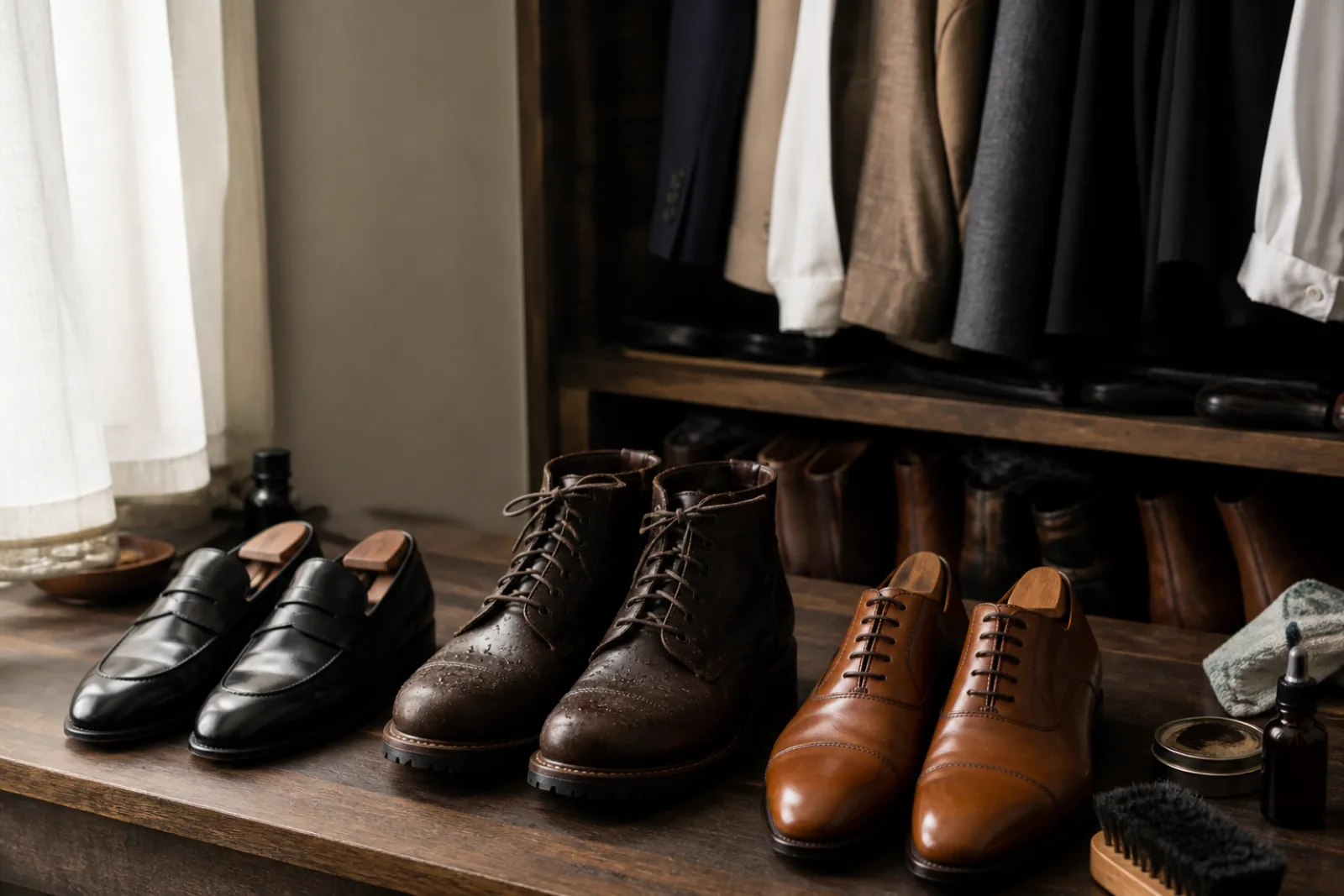
Care is part of style. A linen uniform you will not iron is a wrinkled uniform, which can be a style if you mean it. A viscose blouse that needs a sink every night is not a weekday identity. Match the sentence to the washing machine you have, the same way the smaller-wardrobe article matches pieces to a shared laundry load.
Climate is the other unromantic author. A style built on bare ankles will not be your November. Either you have a cold-weather version of the same silhouette (same jacket shape, heavier cloth) or you have two seasons. Both are coherent. Pretending one summer folder is 'who I am' is how winter becomes a crisis every year.
Style is a repeat, not a brand
- 01
Photograph real days. The repeats are the answer.
- 02
Write one sentence that includes silhouette, shoes, and care. Use it as a filter.
- 03
You are allowed to evolve. You are not required to shop your way into a stranger's grid.
Questions
- 01What if the log is ugly to me?
Then you have a gap between taste and life. Change one variable (better trousers in the same shape, a shoe you like that still walks) rather than the whole identity. Ugly-and-true is still better data than pretty-and-unworn.
- 02Do I need a capsule number?
No. A number without your calendar is a dare. The smaller-working-wardrobe article is about wear count and care compatibility. Use that after you know the sentence.
- 03What if my job clothes and weekend clothes disagree?
Write two sentences. That is still style. It is two contexts. Forcing them into one 'look' is how you get a blazer at the grocery store you resent.