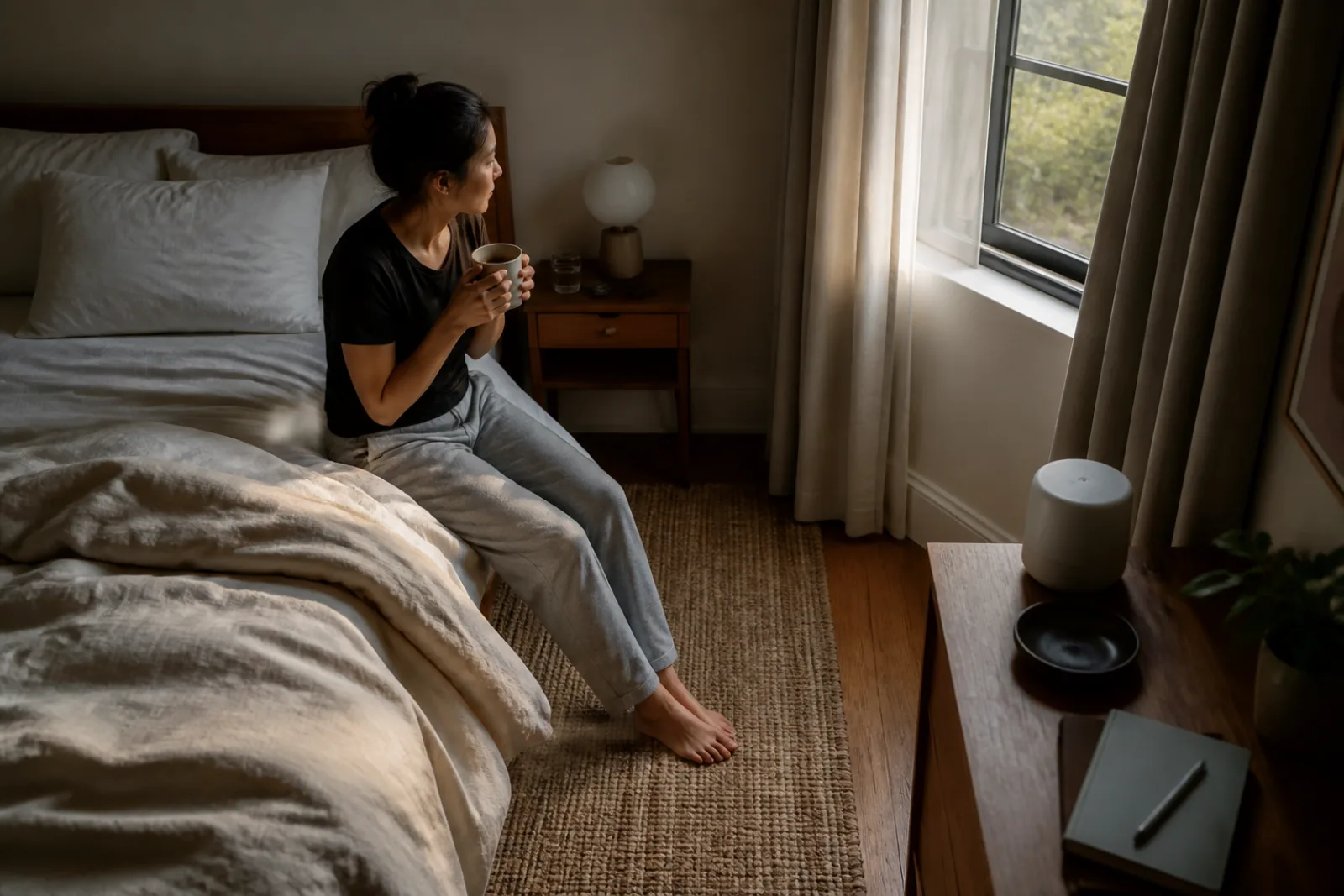
A bedroom can be beautifully made and still be a bad place to sleep. Streetlight through blinds, a charging phone on the nightstand, a weekend wake time that slides three hours, and a cool-looking LED clock are ordinary, and they are also the conditions NHLBI and NIOSH keep naming. The useful work is not a new mattress category. It is a dark room, a stable clock, and an honest line about when the problem has left the room and entered medicine.
This is not an article about bedroom air cleaners, and it is not a deep dive on how to dump heat from a hot apartment. Those are separate, real problems. This is the sleep-environment basics the federal guidance actually agrees on, plus the schedule that sits next to them.
NHLBI puts time in bed before decor. Go to bed and wake up at the same time every day. Keep the weekend difference to about an hour. Staying up late and sleeping in late disrupts the sleep-wake rhythm the rest of the week is trying to keep. If you only remember one intervention that costs nothing, that is it. A perfect cave of a bedroom will not rescue a clock you reset every Saturday.
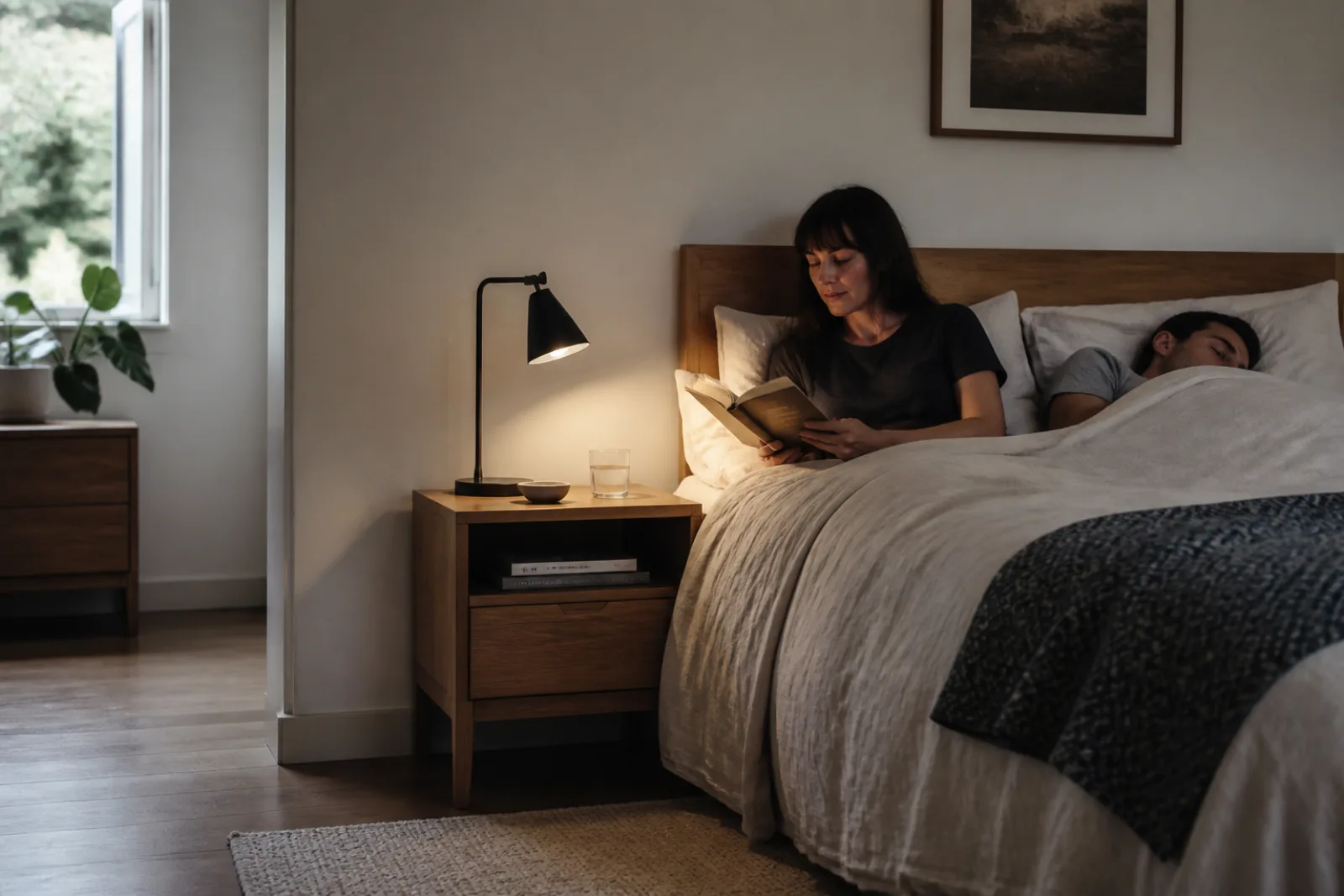
The hour before bed is the second schedule item. NHLBI: use it for quiet time; avoid intense exercise and bright artificial light from a TV or computer, because that light can signal the brain that it is time to be awake. Avoid heavy meals close to bedtime, alcoholic drinks, nicotine, and caffeine. Caffeine's effects can last up to eight hours, which makes a 4 p.m. coffee a midnight problem for some people. CDC's healthy-sleep sheet adds a harder version of the device rule: remove TVs, computers, and smartphones from the bedroom. If you will not remove the phone, at least get the glowing screen off the pillow and out of the last hour.
NIOSH describes the environment as very dark, quiet, cool, and comfortable. NHLBI uses quiet, cool, and dark. The details below are NIOSH's, written for people who have to sleep in daylight as well as at night, which makes them useful for anyone with streetlights or a partner's early alarm.
- 01Dark
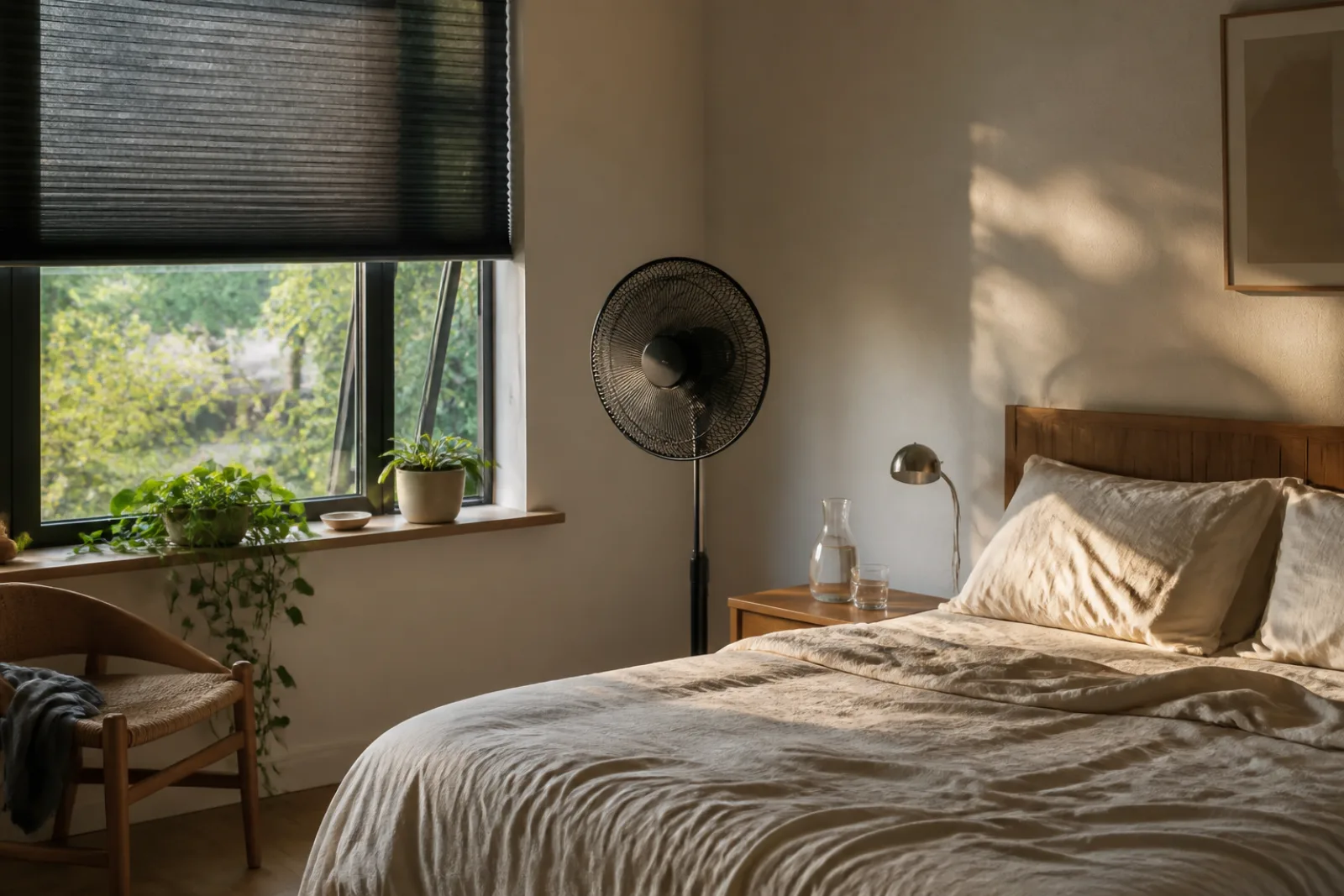
Room-darkening shades or heavy lined draperies, not blinds that leak. Block light around the edges and under the door (hall light off, or a draft stopper). Cover or remove white and blue glows from clocks, phones, and TVs. A dim red nightlight is the bathroom-path exception NIOSH names.
- 02Quiet
The room should be quiet enough that ordinary hallway and street noise does not keep winning. Earplugs, a fan, or a consistent sound you already tolerate are the household tools. A gadget that promises to 'cancel' a barking dog is not a substitute for a door that shuts and a window treatment that also dulls sound.
- 03Cool
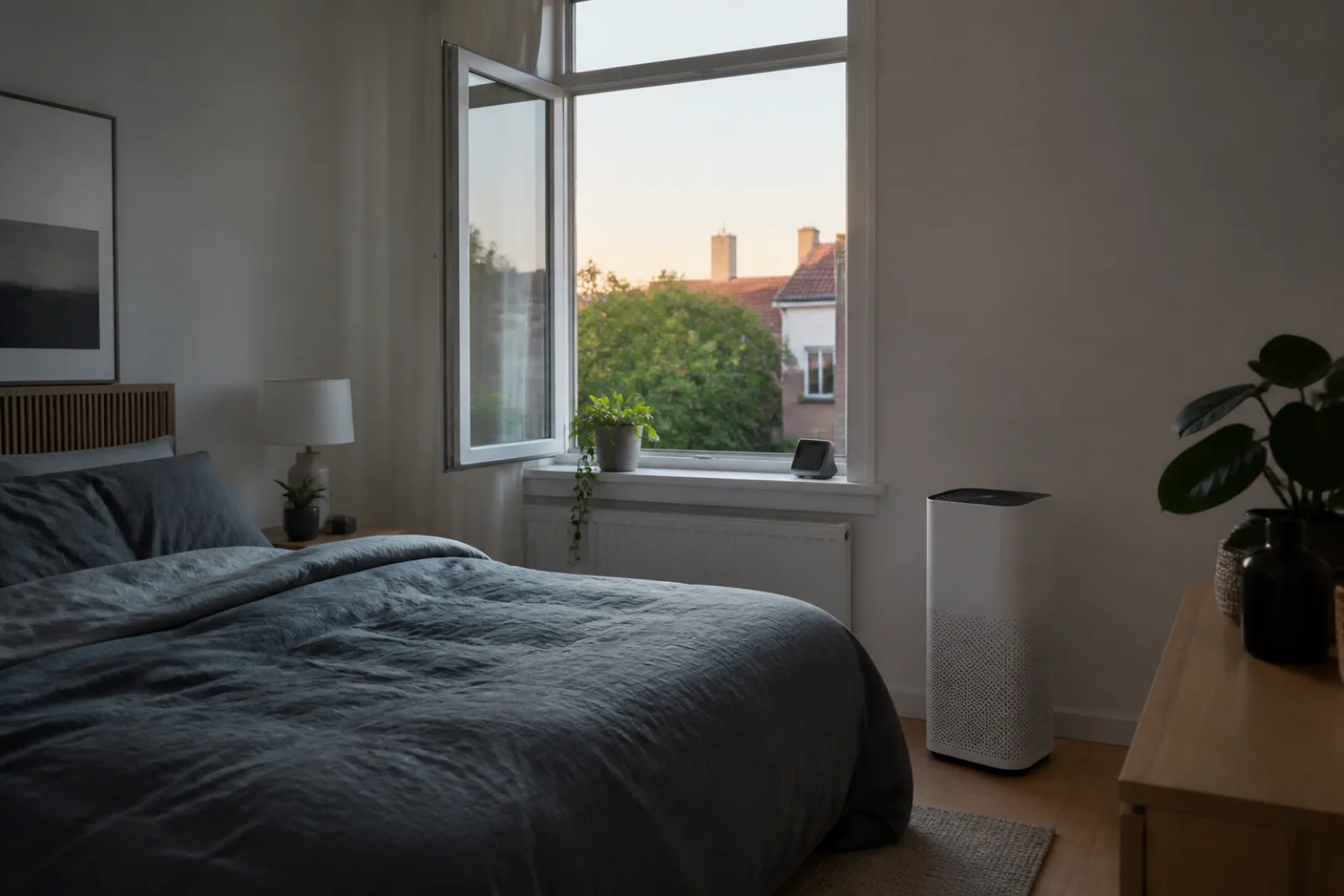
NHLBI and NIOSH both say cool; they do not pin a single thermostat number on those pages. If the room is hot, that is a heat problem (fans, bedding, blocking sun) covered more fully in the separate piece on making a bedroom feel cooler. Do not wait to buy a cooling mattress before you darken the room and stabilize the clock.
- 04A path
If you get up at night, NIOSH wants the path to the bathroom dark and clear. A bright phone flashlight is the opposite of the plan.
| If this is the problem | What to change first | What will not fix it |
|---|---|---|
| You fall asleep late on weekends and feel wrecked on Monday | Hold wake time within about an hour, including weekends (NHLBI) | A new duvet |
| Streetlight or a bright hallway leaks in | Opaque shades, edge gaps, door light (NIOSH) | A sleep app on a glowing phone |
| You lie in bed scrolling | Quiet hour without bright screens; phone off the pillow (NHLBI, CDC) | Night-shift mode as the only change, with the same hour of news |
| You sleep, but wake unrefreshed, snore loudly, or gasp | A clinician. This is past the bedroom. | Another round of blackout curtains |
Naps have a rule if nights are already hard. NHLBI: if you have trouble falling asleep at night, limit naps or take them earlier; adults should nap no more than 20 minutes. Shift workers get different advice (naps, bright light at work, dark bedroom in the day, caffeine only early in the shift) and a clear off-ramp: if you still cannot sleep, talk with a doctor.
The bedroom-as-office problem is real and only partly a willpower story. If the only desk in the house is at the foot of the bed, you will work there. CDC's remove-electronics line is easier in a home that has another room. If it does not, close the laptop and cover it, get the screens off the nightstand, and do not treat 'I answered one email in bed' as a sleep system. The association NHLBI is protecting is: this room, at this hour, is for sleep.
A week of bedroom changes, in order
- 01Pick a wake time and keep it
Including the weekend, within about an hour. This is the cheapest intervention and the one people skip.
- 02Darken the room
Opaque covering, edges, door gap, and the glowing clock. Test by lying down at the hour you actually sleep, not at noon.
- 03Quiet the last hour
No bright TV or computer. Caffeine cutoff early enough that eight hours does not land at bedtime.
- 04Cool enough to stay asleep
Lower the thermostat if you can, lighter bedding if you cannot, fan for air movement. If heat is the whole story, that is a separate project.
- 05Reassess
If you still cannot sleep, or you snore, gasp, or fall asleep unsafely in the day, stop optimizing the room and make a medical appointment.
The room and the clock
- 01
Hold sleep and wake times steady, including weekends within about an hour.
- 02
Make the room dark (including device glows), quiet, and cool. NIOSH is specific about shades, door light, and red versus white/blue night lighting.
- 03
If that does not change the problem, see a clinician. The bedroom is not a clinic.
Questions
- 01Do I have to take the TV out?
CDC's healthy-sleep sheet says to remove TVs, computers, and smartphones from the bedroom. NHLBI at least wants the hour before bed without bright screens. If the TV stays, it should be off in that hour, and it should not be the last light in the room.
- 02Are blackout curtains enough?
They help with windows. They do not fix a phone on the pillow, a blue clock, light under the door, or a wake time that slides. Treat curtains as one line in NIOSH's dark-room list, not the whole system.
- 03I sleep fine but my tracker says I do not.
Consumer wearables are not a diagnosis. How you feel and function in the day, plus any snoring or gasping a partner notices, are the signals that belong in a clinic. A score is not a reason to overhaul a room that already works, and it is not a reason to ignore symptoms.