The internet wants a number: every other day, twice a week, never on consecutive mornings. Scalps did not agree to that. They produce sebum at different rates. Hair holds that oil differently depending on whether it is straight and fine or coiled and thick. The American Academy of Dermatology's public advice is almost annoyingly simple: wash when the hair is dirty or oily. Then it gives the range people actually live in, from daily to every few weeks.
That range is the answer. A single weekday rule is a compromise that fits a salon model's shoot schedule, not your head.
| Hair and scalp | Wash frequency they describe | Where the shampoo goes |
|---|---|---|
| Straight hair, oily scalp | You may want to shampoo every day | Scalp, not the full length |
| Dry, textured, curly, or thick hair | When needed, at least once every 2 to 3 weeks as needed | Scalp; conditioner on the whole length if dry or curly |
| Fine or straight hair, using conditioner | Whatever oil requires | Conditioner on the ends, not a heavy coat on the scalp |
| Flakes showing up | May mean you are not shampooing enough, or the conditioner/oil is wrong | Do not assume the only fix is to wash less |
Confusing them is how daily shampoo wrecks ends, and how rare shampoo leaves a scalp unhappy.
- 01Scalp
Skin. It makes oil, sheds cells, collects product. That is what shampoo is for. AAD: apply shampoo to the scalp to wash away buildup, dead skin, and excess oil.
- 02Lengths
Dead fiber. They get sebum that has traveled down the shaft, plus whatever you put on them. They do not need a full detergent cycle every time the scalp does. Runoff plus conditioner is the usual split.
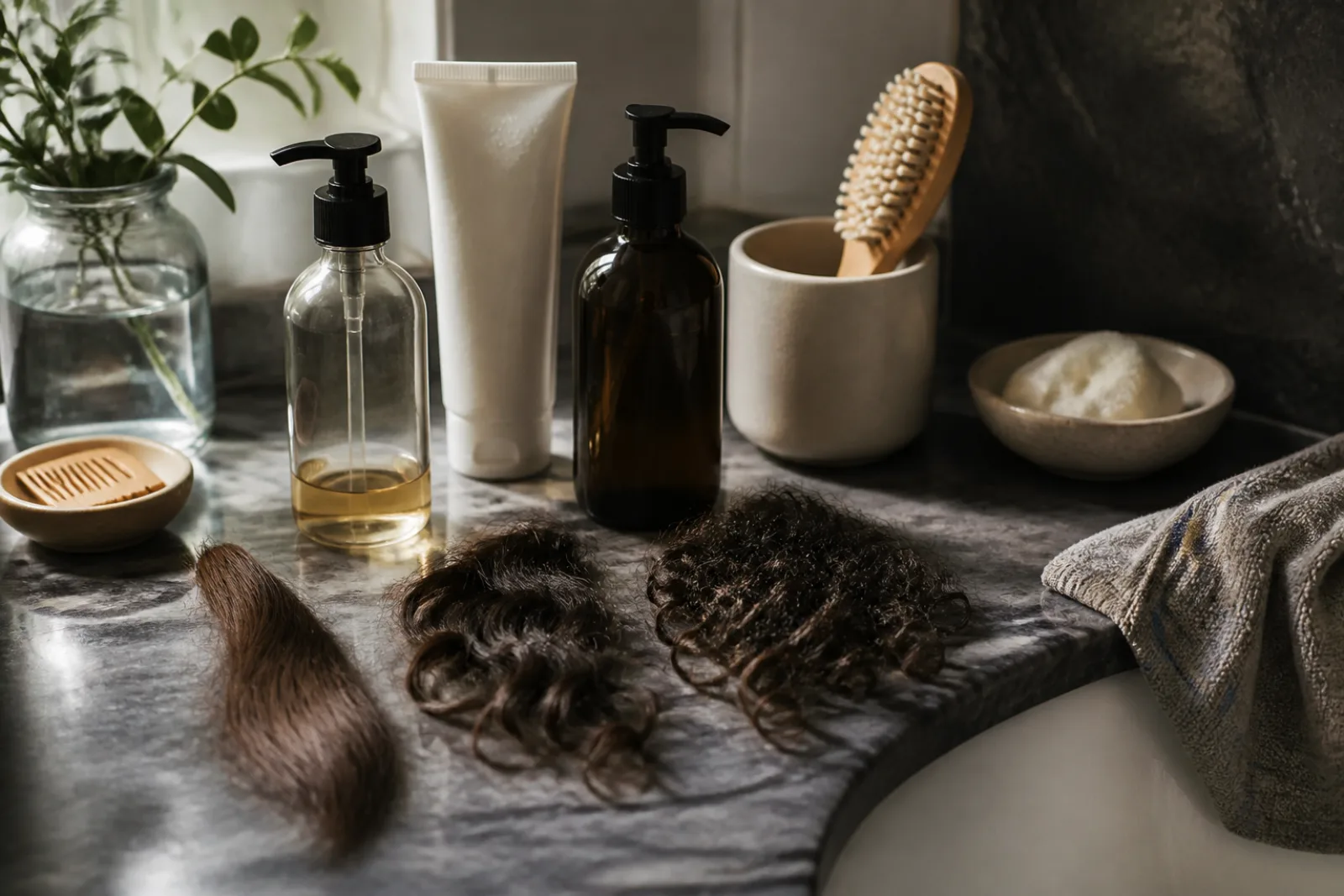
Sebum is not dirt in the moral sense. It is the scalp's oil. On straight, fine hair it coats the shaft quickly and looks greasy by day two. On coiled hair it travels slowly, and the fiber often needs that oil. Washing coiled or very dry hair on a straight-hair calendar is how people get frizz and breakage and then blame water. Washing an oily straight scalp on a 'protective' once-a-week calendar is how people get itch, odor, and flakes and then blame the shampoo brand.
Water-only days, cowashes, and dry shampoo are tools for the gap between real washes. They are not a medical protocol. If dry shampoo is the only thing touching the scalp for weeks, you have postponed the clean, not replaced it. AAD's floor for dry, curly, or thick hair is still a shampoo when needed, with a two-to-three-week outer example, not never.
Exercise, hats, and product change the clock. A runner with fine hair may need the daily wash AAD allows. A person who does not sweat on the scalp and uses no stylers may go longer. Watch the scalp, not the influencer.
The scalp sets the calendar
- 01
Wash when it is dirty or oily. Daily and every few weeks are both inside AAD's described range, for different heads.
- 02
Shampoo the scalp. Condition the hair you have, ends for fine, more length for dry or curly.
- 03
Flakes can mean wash more, not only wash less.
Questions
- 01Will my hair 'get used to' washing less?
Sebum production is hormonal and local. Stretching washes will not reliably train an oily scalp to make less oil. It may just look greasier in the middle. If the scalp is unhappy, you have your answer.
- 02Should I shampoo twice in one shower?
A second pass can help if the first was mostly product and the scalp still feels coated. It is not a rule. If the hair is already dry, one thorough scalp wash is enough.
- 03Is it bad to wash every day?
Not if that matches an oily straight scalp, which is the case AAD names. Use a milder shampoo if daily detergent is stripping the lengths, and keep conditioner on the ends. Daily plus hot tools plus a harsh formula is a different problem.