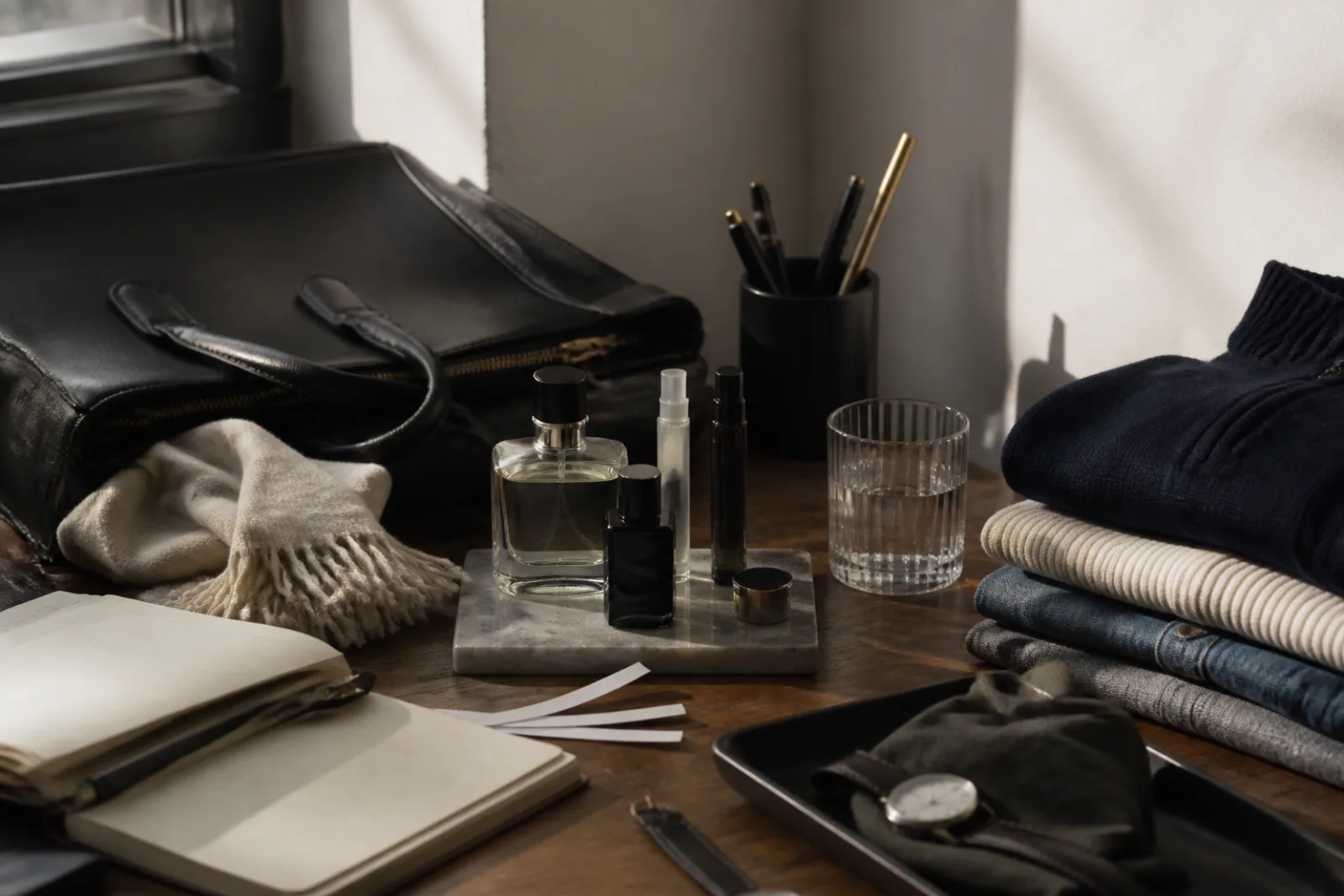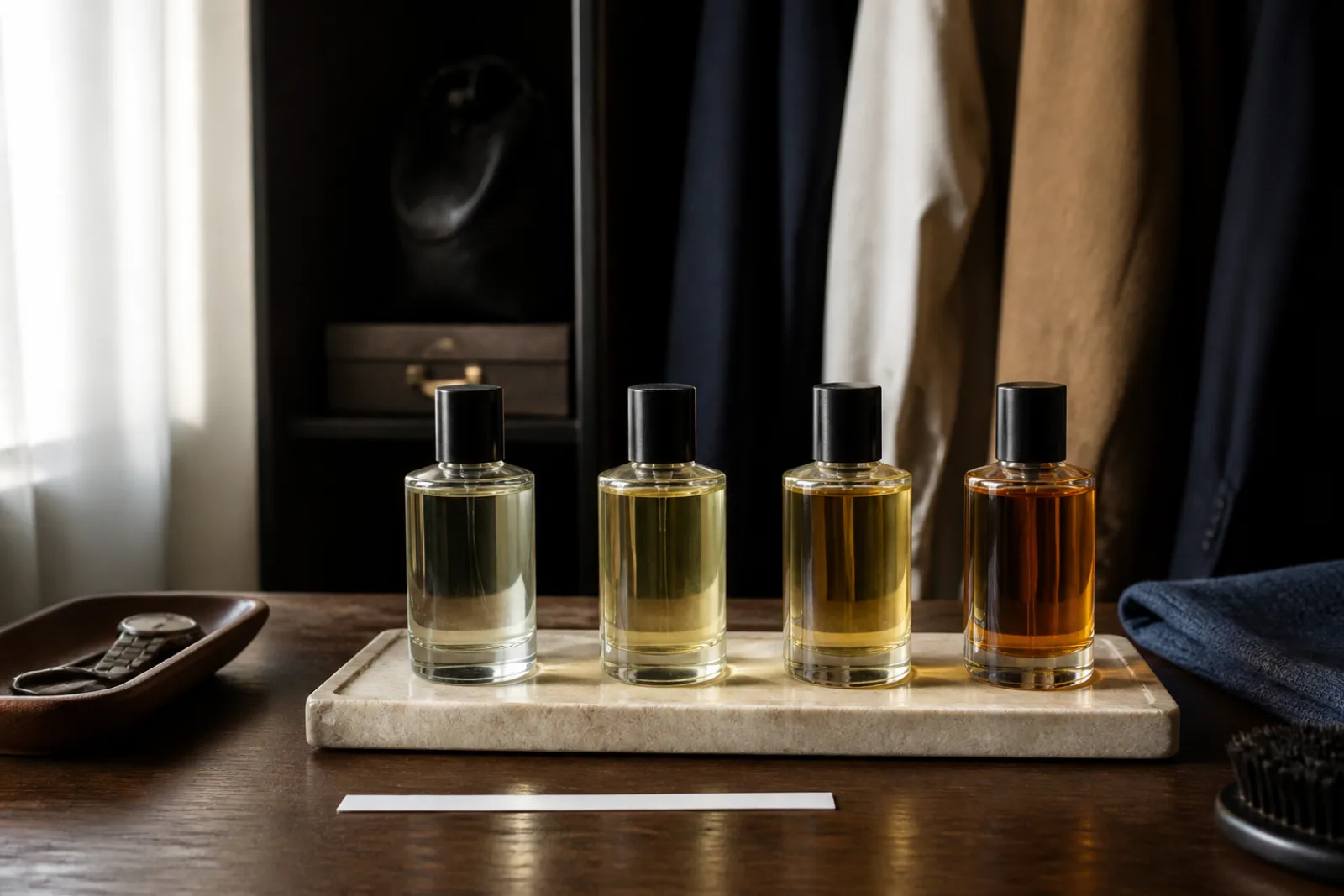
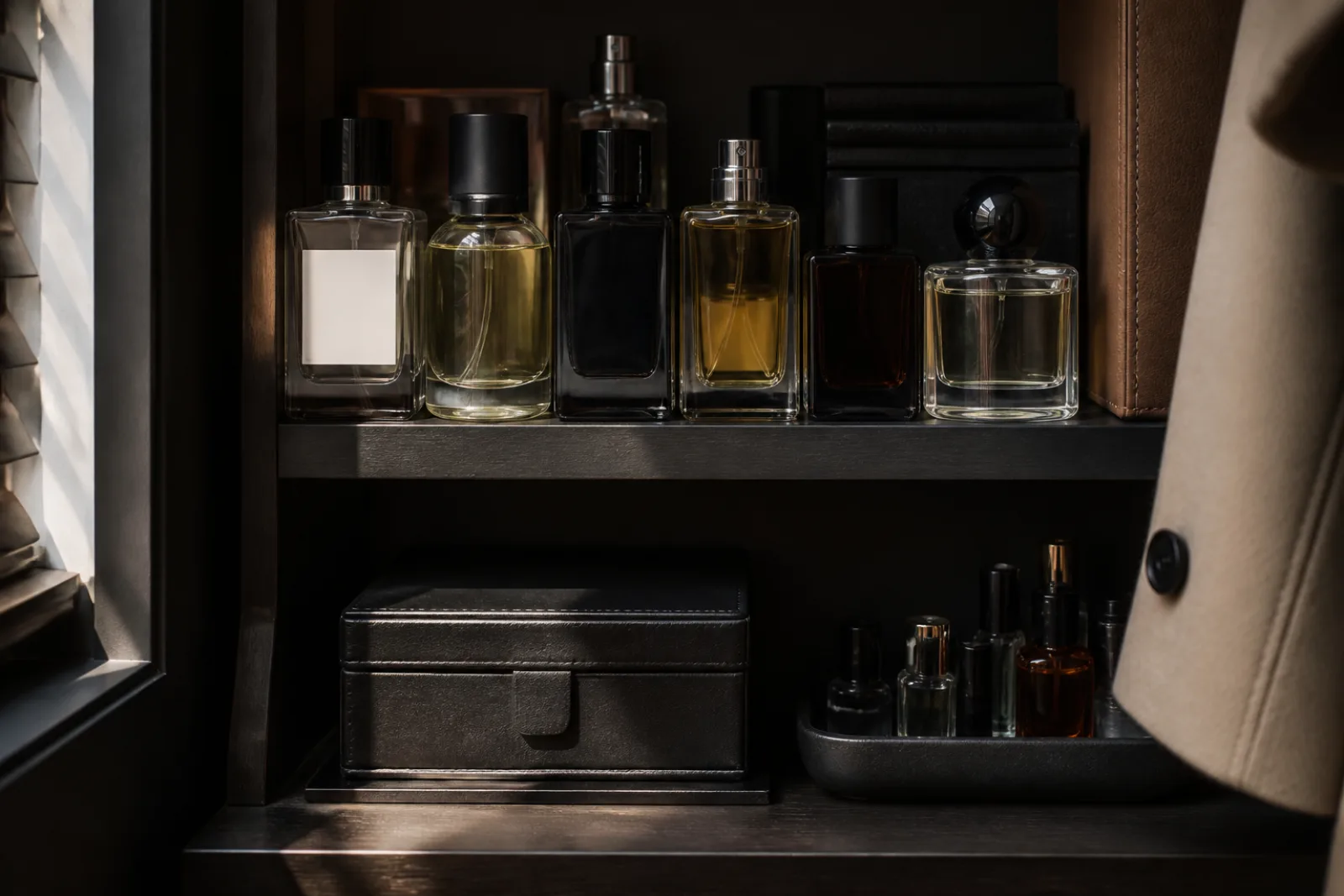
A perfume is a solution of smellable molecules in alcohol, plus water and whatever the formula uses to hold it together. Those molecules do not stay frozen in time. Heat speeds reactions. Light, especially sun through a window, adds energy that breaks bonds. Oxygen from a loose cap or a half-empty bottle participates in oxidation, which is why old citrus often goes sharp and why some florals turn soapy or flat.
That is ordinary organic chemistry, not a luxury myth. You do not need a wine fridge. You need to stop treating the bottle like a bathroom accessory.
| Place | Heat | Light | Verdict |
|---|---|---|---|
| Interior closet, original box optional | Stable, indoor | Dark | The default that matches the chemistry |
| Bedroom drawer, away from a radiator | Usually fine | Dark if the drawer shuts | Good, if the drawer is not on an exterior wall that bakes |
| Bathroom cabinet | Spikes with every shower | Often dark | Convenient and unkind. Steam plus heat is the problem, not the sink. |
| Windowsill or car | Can exceed anything in the house | Direct sun | A way to age a bottle in weeks |
| Refrigerator | Cool and steady | Dark | Optional. Condensation when you take it in and out is the risk. A closet is enough for almost everyone. |
The original bottle is usually dark glass with a sprayer that limits how much air you pump in. Pouring the juice into a clear glass decanter for a vanity photo trades protection for display. If you want the bottle out, put an empty dummy out and keep the juice in the closet. Collectors who refrigerate are managing a cellar. A daily fragrance that you finish in a year will not gain much from 50°F. It will lose a lot from 90°F on a dash in July.
Travel atomizers are a controlled leak. Fill what you will use in a few weeks. Do not park a half-ounce of leftover citrus in a clear plastic sprayer in a gym bag. Cap the real bottle as soon as you have filled the travel spray.
Color change and a harsh top note are the usual tells. A juice that went from pale to brown, or a lemon that now smells like furniture polish, has oxidized. Using it will not hurt most people. It will not smell like the day you bought it. Do not 'fix' it with heat or by shaking. Finish it on days you do not care, or discard it.
A use-and-put-away habit
- 01Spray
Cap back on immediately. The sprayer is not a bottle stopper if you leave it off on the sink.
- 02Return to the dark
Same closet or drawer every time. The vanity is for the gesture, not the archive.
- 03Do not top up from a decant into the original
You would be mixing ages and adding air. Finish the travel spray on its own.
Dark, cool, closed
- 01
A closet beats a bathroom. A bathroom beats a car. Do not improvise a sun display.
- 02
Original dark glass, cap on. Clear decanters are theater.
- 03
Once it smells sharp or like solvents, you are smelling breakdown. Storage will not reverse it.
Questions
- 01Do I need to keep the cardboard box?
The box is extra shade and a little padding. It is not required if the bottle is already in a dark drawer. It helps on a shelf that gets room light.
- 02Can I store fragrance in the freezer?
Unnecessary, and repeated freeze-thaw plus moisture on the sprayer is a worse idea than a closet. Cool and steady beats extremely cold and wet.
- 03My bottle is half empty after two years. Is it done?
Not automatically. More headspace means more air, so it may age faster from here. Smell it. If the dry-down is still itself, wear it. If the opening is harsh, it has moved on.