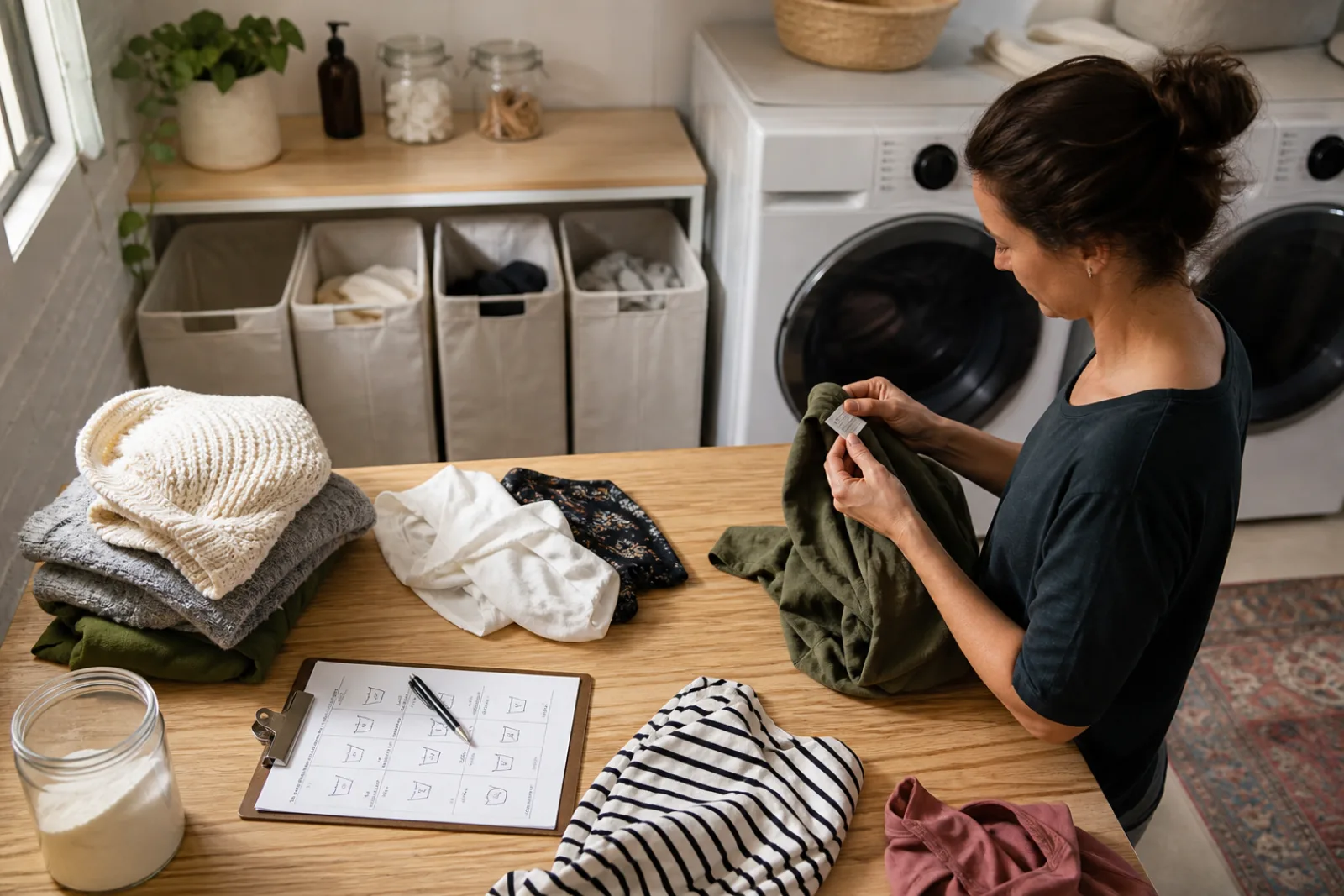
Sorting by color hides the real variable, which is what each garment can survive. A repeatable system sorts by heat and agitation tolerance, reads the care label as an instruction set, and treats every stain as a race against the dryer.
Color is a secondary concern; the variable that actually determines how a load should be washed is what the garment's fiber, dye, and construction can physically survive, which the care label already states. A repeatable system sorts by that tolerance, follows label instructions as tested manufacturer data rather than suggestions, and treats stains as time-limited, since washer and dryer heat is what makes most stains permanent.
A ten-minute evening reset needs the right three tasks and a fixed stopping cue. When it keeps running long, that is diagnostic information, not a discipline problem.
A household buying rule works by making you write down the use case, the upkeep, and what gets displaced, before a waiting period even starts, not by relying on willpower alone.
6 MIN
The weekly letter
CULTURE COLUMN in your inbox.
One useful story, a short edit of objects and ideas, and no manufactured urgency.