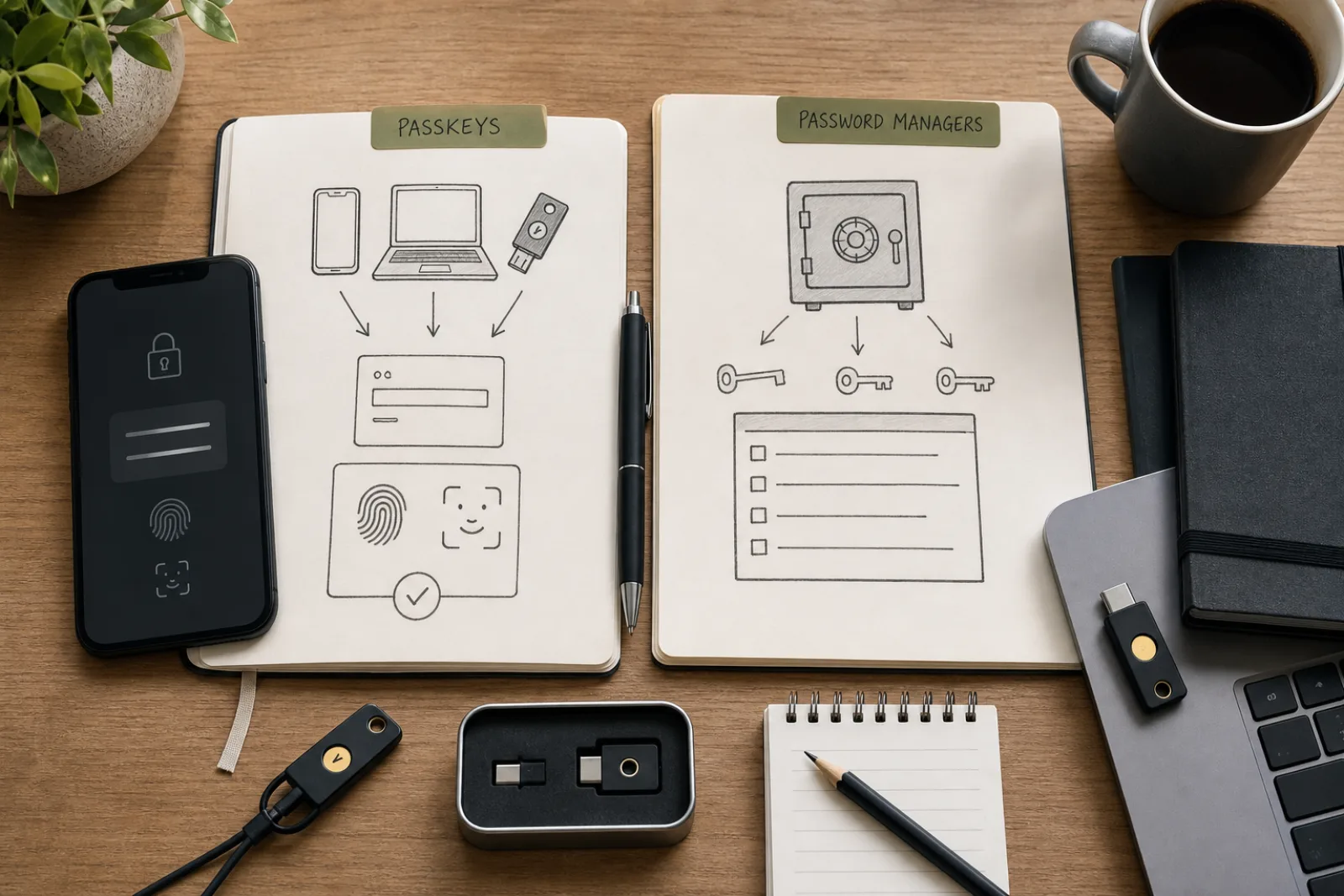
Passkeys are phishing-resistant cryptographic credentials. Password managers still hold the majority of logins that have no passkey, plus recovery codes. FIDO's own model includes third-party passkey providers. The 2026 move is not a fork in the road. It is a manager that can store passkeys, used on every site that still wants a password.
Passkeys, as the FIDO Alliance defines them, replace the typed password with a device-held cryptographic key, unlocked the way you unlock the phone. They are phishing-resistant because the secret never goes to the site and is bound to the real domain. Password managers remain necessary because most services still use passwords, and because NIST's digital-identity FAQ still treats managers as the sane way to generate unique secrets and to paste them. FIDO also defines passkey providers that are not the phone vendor: a manager can store synced passkeys across Windows, Android, and macOS. Device-bound keys on a hardware token are a different, stricter tool. The practical setup is passkeys on every account that offers them, inside a manager or platform that you can recover, and unique passwords everywhere else.
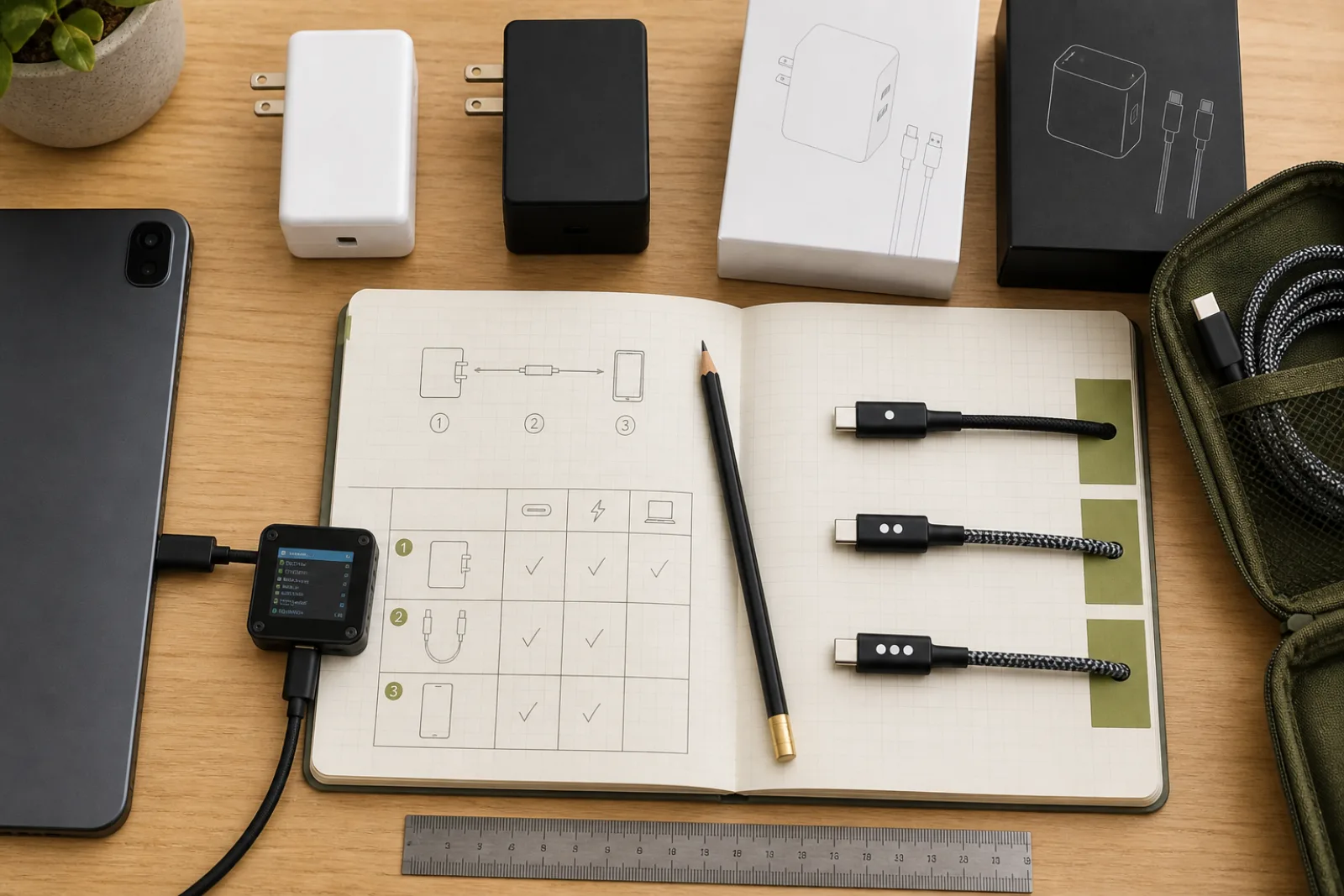
USB Power Delivery is a negotiated contract: 5, 9, 15, and 20 volts up to 100 watts in SPR, then 28, 36, and 48 volts up to 240 watts in EPR. The logo, the cable's e-marker, and the device's request all have to agree.
7 MIN
The weekly letter
CULTURE COLUMN in your inbox.
One useful story, a short edit of objects and ideas, and no manufactured urgency.